22 March 2026
William Steinberg: The Maestro Who Turned Discipline into Fire
On Classicapedia: William Steinberg, Otto Klemperer, Bronisław Huberman, Arturo Toscanini, Dmitry Shostakovich
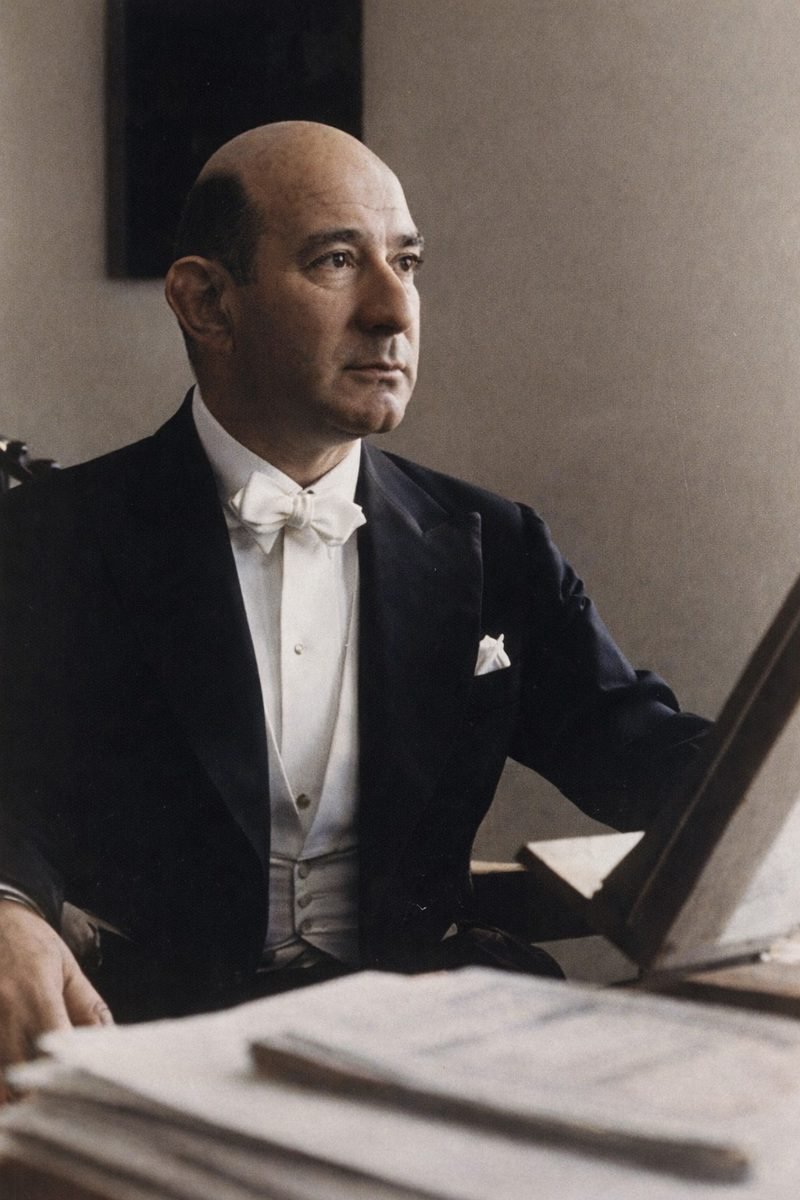
There are conductors whose legends are built on theatrical personality, and there are others whose greatness lies in something more durable: authority without noise, discipline without coldness, and an orchestral standard so high that it begins to feel like moral character. William Steinberg belonged to that second kind. Born Hans Wilhelm Steinberg in Cologne on 1 August 1899 and dead in New York City on 16 May 1978, he became one of the major conductors of the mid-20th century, deeply associated with the Pittsburgh Symphony, but also important in Buffalo, Boston, London, and at the Metropolitan Opera. He was admired for a style repeatedly described as straightforward yet expressive, restrained in gesture but full of inner drive.
What makes Steinberg especially fascinating is that his biography joins three powerful themes: the old German Kapellmeister tradition, exile from Nazi Germany, and the remaking of a musical life in America. He worked first under Otto Klemperer at Cologne Opera, later held opera posts in Prague and Frankfurt, then helped Bronisław Huberman build the Palestine Symphony in 1936 after being forced out of Germany, before establishing himself as a major American conductor. His life therefore carries not only artistic significance but also historical weight.
Childhood and Formation: Cologne, Study, and the Kapellmeister Ideal
Steinberg’s musical formation was solidly German and solidly practical. Britannica records that he apprenticed under Otto Klemperer at the Cologne Opera and became principal conductor there in 1924. That single fact already says much. Klemperer’s world was one of seriousness, hard standards, and deep structural command. Steinberg did not come into music through charm or through publicity; he was trained in one of the hardest schools of operatic discipline.
This early grounding helps explain the shape of his later authority. Conductors formed in the old theater system often know not only scores but also the daily reality of musical labor: rehearsal, pacing, balance, singer psychology, and the conversion of ideas into repeatable standards. Steinberg would later seem almost the ideal example of that tradition. He was not a mystical dreamer on the podium. He was a builder, a corrector, and a finisher. He was the kind of maestro who made orchestras play better because he knew exactly what he wanted.
Prague and Frankfurt: The Rise of a Major Conductor
Britannica notes that Steinberg conducted opera in Prague from 1925 to 1929 and in Frankfurt-am-Main from 1929 to 1933. These were not marginal posts. They placed him inside the mainstream of Central European operatic life at a high level during a period of extraordinary artistic richness. By the early 1930s he was already a conductor of major standing, and his career might easily have continued upward within German musical institutions had history not intervened.
This phase of his life is important because it reminds us that Steinberg’s later American greatness was not the story of a provincial musician who found success abroad. He had already become a serious European conductor before exile redirected his path. His later authority in the United States rested on a mature foundation, not on improvisation. America did not invent him; it gave him a second stage on which to reveal what he already was.
Exile, 1933–1936: From Nazi Germany to Palestine
The Nazi seizure of power shattered that European trajectory. Steinberg, who was Jewish, could not continue under the regime. Britannica states that in 1936 he founded, with Bronisław Huberman, the Palestine Symphony, later the Israel Philharmonic. Huberman’s biography adds that Steinberg trained the orchestra for its first concert in December 1936, conducted by Toscanini.
This is one of the noblest chapters in his life. The Palestine Symphony was not merely a musical enterprise. It was part of a rescue network for displaced Jewish musicians and their families. To help build such an orchestra in those years was to participate directly in cultural survival under catastrophe. Steinberg was therefore not only rebuilding his own life; he was helping others do the same. He stood at a moment where music was not a luxury but a form of rescue.
America: Buffalo and the Rebuilding of A Career
After emigrating to the United States, Steinberg became music director of the Buffalo Philharmonic. The Pittsburgh Symphony’s historical account notes this clearly and places Buffalo as the immediate prelude to his Pittsburgh years. This was the stage on which he re-established himself in American orchestral life.
Buffalo matters because many émigré conductors needed time to adapt to American institutions and audiences. Steinberg did not simply survive that transition; he mastered it. He emerged as the kind of conductor orchestras trusted: stable, exacting, musically sophisticated, and able to raise standards without theatrical self-display. The old European training and the new American context met productively in him.
One especially notable achievement from this period was his 1946 recording of Shostakovich’s Seventh Symphony with the Buffalo Philharmonic, identified on Wikipedia as the first studio recording of the work. This is a striking detail because it shows Steinberg not only as a builder of orchestras but also as an artist engaged with urgent 20th-century repertory.
Pittsburgh: The Great Identification
Steinberg became music director of the Pittsburgh Symphony in 1952 and remained its central figure until 1976. The orchestra’s official history treats this as one of its decisive eras, and the chronology confirms how long and consequential the relationship was. During these years he shaped the orchestra’s profile, led major tours, and helped turn Pittsburgh into a serious symphonic center of national and international stature.
This is the chapter by which he is most deeply remembered. Pittsburgh gave him what Philadelphia gave Ormandy or Cleveland gave Szell: an orchestra that became a long-term instrument of his musical personality. Under Steinberg, the Pittsburgh Symphony combined discipline and force with unusual clarity. He did not build a legend around himself in the modern media sense; he built one around the orchestra’s playing. He turned Pittsburgh into an orchestra that could speak with authority on any major stage.
The Pittsburgh years also included important outreach. The orchestra’s history records “industry concerts” sponsored for workers and touring activity through Pennsylvania, Ohio, and West Virginia, later expanding to major international appearances in Europe and the Middle East. Steinberg was therefore not only refining orchestral standards; he was widening the social and geographic reach of symphonic music.
Boston, London, New York: A Wider Presence
Steinberg’s authority extended beyond Pittsburgh. From 1958 to 1960 he conducted the London Philharmonic, though he resigned because of physical strain. He then served as principal guest conductor of the New York Philharmonic from 1966 to 1968, after leading the orchestra during a sabbatical period in 1964–65. Most prominently, he became music director of the Boston Symphony Orchestra from 1969 to 1972 while still maintaining his Pittsburgh post.
These appointments reveal something fundamental: Steinberg was not merely a beloved local chief. He was regarded across the musical world as a conductor of the highest class. Yet what is striking is that he resisted the usual logic of prestige. Wikipedia quotes him saying of Pittsburgh, “We are too closely wed, the Pittsburgh Symphony and I, to contemplate any divorce.” That sentence reveals both loyalty and philosophy. He believed an orchestra had to be educated over time, not merely visited. He trusted duration more than glamour.
Opera and the Wider Repertory
Though known especially as a symphonic conductor in America, Steinberg remained deeply tied to opera. Wikipedia notes Metropolitan Opera performances of Barber’s Vaness, Verdi’s Aida, Wagner’s Die Walküre, and later Parsifal in 1974. This is an important reminder that he never ceased to be a musician of the theater.
His repertory more broadly was wide and serious. He was admired in Beethoven, Brahms, Bruckner, Mahler, Strauss, and Wagner, but also championed 20th-century music and unusual choices, from all-Schoenberg programs to neglected works like Berlioz’s Roméo et Juliette and Tchaikovsky’s Manfred. The modern press quoted him with characteristic bluntness: “I merely dare. I take a risk. Criticism I get anyway.” That line suits him perfectly. He was not an eccentric programmer for the sake of display, but a serious conductor willing to trust music beyond the obvious canon.
The Steinberg Style: Restraint with Inner Drive
How did Steinberg conduct? The descriptions that recur are unusually telling: straightforward yet expressive, dynamic in interpretation but restrained in podium manner. Wikipedia quotes his own interpretive credo: one must respect the character of the music and not “grow lush foliage in a well tempered English garden.” It also preserves his dry joke about more acrobatic colleagues: “The more they move around, the quieter I get.”
Those remarks go straight to the center of his art. Steinberg distrusted excess of gesture because he believed the real work happened in rehearsal. In performance, the conductor should remind and signal, not manufacture excitement artificially. That philosophy belongs to the best Kapellmeister tradition: preparation first, results afterward. He made authority seem almost undramatic, and that was part of his strength.
Musicians seem to have responded deeply to this mixture of severity and wit. The same source preserves the wonderfully dry line he once used when correcting a player: “I may be wrong, but I don’t think so.” That is not merely amusing; it captures the impression Steinberg gave—firm, cultivated, quietly amused, and profoundly sure of his musical judgment.
Anecdotes and Curiosities
Some details about Steinberg linger precisely because they illuminate personality. He reportedly liked to eat a steak before every concert and joked that conducting was therefore an expensive business. He said he spoke “four and a half languages,” the half being English. At a Pittsburgh fundraiser he even wore a blond wig given in jest by Johnny Carson. These stories matter not because they are profound, but because they reveal a side of him easy to miss behind the stern musical image: puckish, dry, and unpretentious.
Yet the most revealing “curiosity” may be more serious: he reportedly said a conductor only begins to know what he is doing at seventy. Whether taken literally or not, the remark expresses an artistic temperament that valued maturity, judgment, and earned understanding over flashy precocity. That too feels completely Steinberg-like.
Late Years, Ill Health, and Death
Steinberg’s later years were marked by increasing health problems. He resigned the Boston Symphony directorship in 1972 because of ill health, though he continued in Pittsburgh. Wikipedia adds that his final concert took place on 1 May 1978 with the New York Philharmonic and Isaac Stern, after which he was hospitalized. He died on 16 May 1978 at the age of 78.
There is something moving in the fact that he continued working almost until the end. Steinberg was not a conductor who staged his legend carefully; he simply kept serving music as long as he could. His death closed a life that had begun in old European opera houses, passed through exile and institutional rebuilding, and ended with the reputation of one of America’s great orchestral chiefs firmly secured.
Why William Steinberg Still Matters
William Steinberg still matters because he represents a kind of greatness that can be underestimated in an age addicted to spectacle. He matters because he proved that discipline, taste, preparation, and long-term loyalty can create an enduring artistic monument. He matters because he carried the best of the German Kapellmeister tradition through exile into American musical life. He matters because he made the Pittsburgh Symphony one of the world’s respected orchestras. And he matters because he did all this without vanity becoming the center of the story.
For followers of classical music on Facebook, that is perhaps the most compelling way to remember him. William Steinberg was not merely a fine German-American conductor, not merely an émigré success story, and not merely the long-time chief in Pittsburgh. He was the maestro who turned seriousness into excitement, and restraint into fire. That is why his name still deserves to be spoken with respect.