20th century
William Steinberg
1899–1978 · Cologne · American conductor of German origin
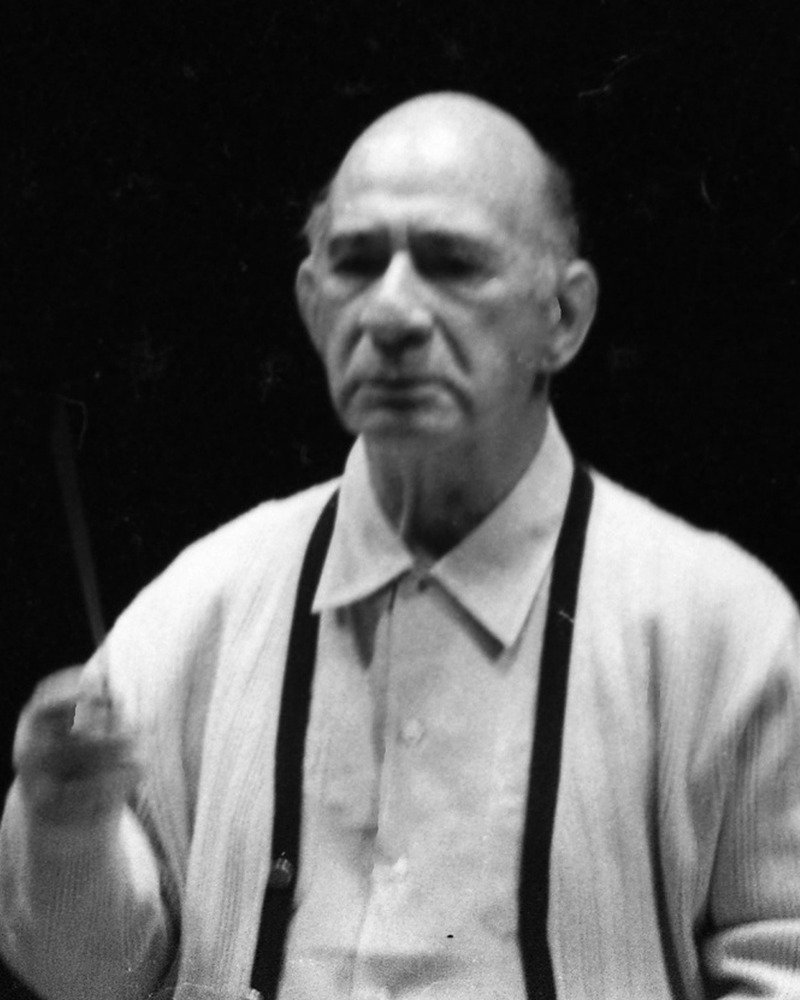
William Steinberg (Hans Wilhelm Steinberg) was a conductor of German birth, born in Cologne on 1 August 1899 and dying in New York on 16 May 1978. His career spanned interwar Europe, the exile of the 1930s and a long career in the United States, where he came to lead some of the country's leading orchestras.
Childhood and training
Steinberg showed musical gifts from an early age. He composed, played the piano and the violin, and at thirteen conducted a work of his own for chorus and orchestra setting passages from Ovid's Metamorphoses. He studied conducting with Hermann Abendroth at the Cologne Conservatory, a foundation that would shape his whole career on the podium.
First posts in Germany and Czechoslovakia
His first significant professional step was the Cologne Opera, where he worked as assistant to Otto Klemperer and, from 1924, as principal conductor. A year later he took a post in Prague. In 1929 he moved to Frankfurt as music director, and there he conducted the premières of Schoenberg's Von heute auf morgen and Antheil's Transatlantic, as well as an early performance of Weill's Mahagonny. He also conducted regularly at the Berlin Staatsoper.
The rise of the Nazis and exile
With Hitler's accession to power, his activities were confined to concerts for the Jewish Culture League in Frankfurt and Berlin. He emigrated in 1936 and, together with Bronisław Huberman, co-founded the Palestine Orchestra, later known as the Israel Philharmonic. After the inaugural concert, conducted by Toscanini, Steinberg became its first conductor.
The United States: NBC, Buffalo and Pittsburgh
At Toscanini's invitation he went to America in 1938 as associate conductor of the NBC Symphony Orchestra, and he appeared as a guest with many other orchestras and at the San Francisco Opera between 1944 and 1948. From 1945 to 1953 he was music director of the Buffalo Philharmonic, and from 1952 to 1976 of the Pittsburgh Symphony, a post he combined with others: the London Philharmonic (1958-1960), the New York Philharmonic as senior guest conductor (1966-1968) and, finally, the Boston Symphony (1969-1972), where he succeeded Leinsdorf.
Final years
By the time he reached Boston, his health and strength were already diminished. In his seventies he curtailed his activity, and his always economical gestures became minimal.
Character and style
Steinberg was a cultivated man of exceptionally private temperament. He embodied the integrity and selflessness of Toscanini and Klemperer, the two conductors who most influenced his career. In his best years his baton technique was hard to surpass for cleanness and clarity. Until the late 1960s, however, he disfigured with cuts some of the music of Bruckner, Mahler and Elgar, composers for whom he felt the deepest sympathy; that he thoroughly reconsidered such a practice relatively late in his career is very telling. When young he was receptive to new music, though later his performances of modern works rarely went beyond dutiful note-reading. He excelled in Beethoven, Wagner, Bruckner and Elgar, and in Strauss, whose music he approached with an elegantly understated manner that few could match. His Boston performances of Verdi's Requiem, given on the centenary of Manzoni's death, were not fiery, but were among the most honest and moving since Toscanini's.
Legacy
Steinberg left the image of a solid, clear-minded conductor of rare artistic integrity, formed in the tradition of Toscanini and Klemperer and faithful to a German and Romantic repertoire that he defended with rigour.
Notable works and achievements
- Presentation in Frankfurt of the premiere of Schoenberg's Von heute auf morgen
- Premiere of Antheil's Transatlantic in Frankfurt
- Early performance of Weill's Mahagonny in Frankfurt, one of the first
- Conducting of Verdi's Requiem in Boston for the centenary of the death of Manzoni
Teachers and pupils
Studied with
- Hermann Abendroth (conducting)
Pupils
- Richard Dufallo (conducting)
- Robert Beaser (conducting)
Stories about William Steinberg
Anecdotes and curiosities
A conductor who barely moved
Steinberg was known for an almost motionless podium manner. He liked to joke that the more his colleagues moved around, the quieter he got. His restraint was part of his style, and he never sought flashy displays.
The baton taken from his hand
According to the grandson of composer Ernst Toch, Steinberg was rehearsing Toch's opera in Cologne when Nazi brownshirts stormed into the hall and literally lifted the baton out of his hand. It is an account passed down by the composer's family.
Fired for his own bowings
After playing as second violinist in Cologne, he was dismissed by Otto Klemperer for using his own bowings. Klemperer soon rehired him as an assistant, a post he held without any salary.
Four and a half languages
Steinberg claimed he spoke four and a half languages, the half being English. He also quipped that conducting had become the profession of a traveling salesman, and he joked freely about his own image in the press.
Source: Wikipedia (EN) · CC BY-SA 4.0