1 March 2026
Richard Strauss: From Conservative Prodigy to Symphonic Revolutionary (1864–1896)
On Classicapedia: Richard Strauss, Alexander Ritter
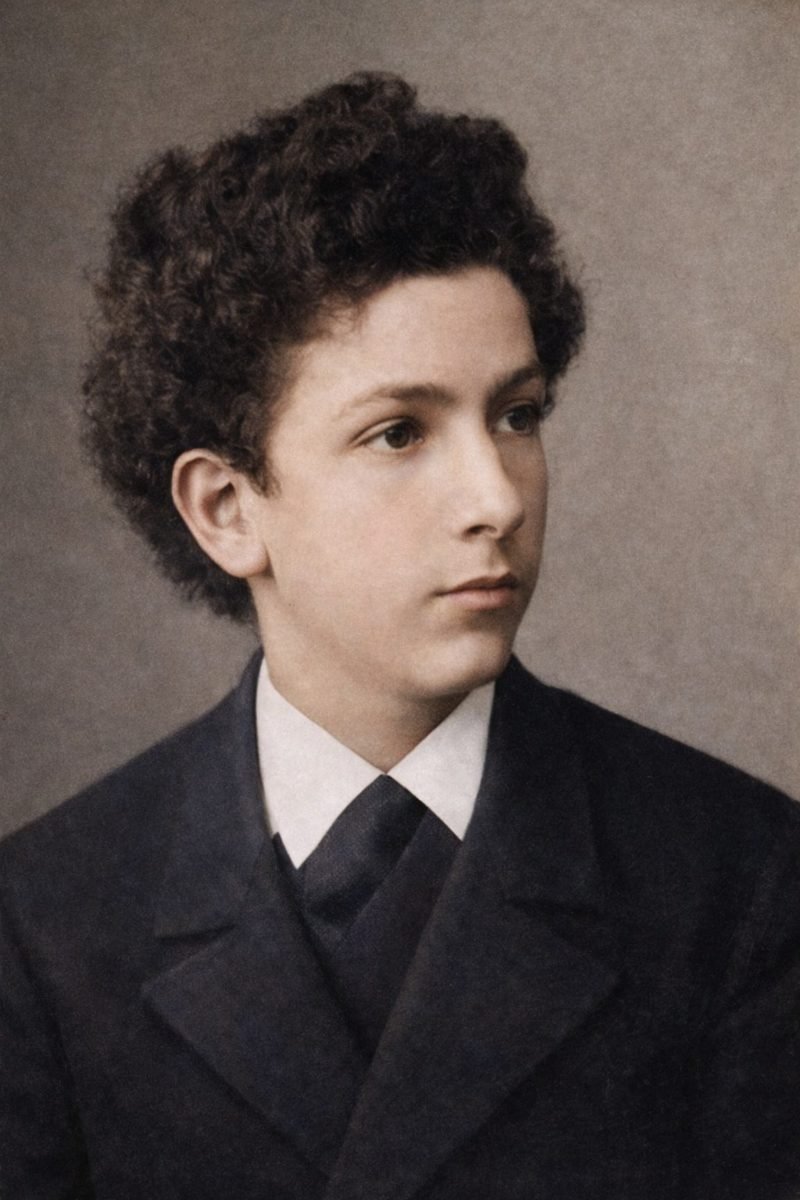
Richard Georg Strauss (1864–1949) was born on 11 June 1864 in Munich, into a deeply musical but aesthetically conservative household. His father, Franz Strauss (1822–1905), was the celebrated principal horn of the Munich Court Orchestra and a fiercely anti-Wagnerian musician.
From early childhood, the young Strauss received rigorous and methodical training in piano, violin, harmony, counterpoint and orchestration.
Anecdote: the anti-Wagner household. Franz Strauss reportedly forbade Wagner's music in the home, considering it dangerous modernism. Ironically, the son would later become one of Wagner's most brilliant heirs.
Essential early influence: a classical discipline that gave Strauss his formidable technical foundation.
Strauss's principal early composition teacher was Friedrich Wilhelm Meyer, who instilled in him a strong grounding in classical forms. Unlike many later modernists, Strauss began as a thoroughly conservative composer.
His early works of the late 1870s and early 1880s include chamber music, piano pieces, the Serenade for Winds, Op. 7 (1881) and the Suite in B-flat, Op. 4. These pieces show clear influence from Mendelssohn, Schumann and Brahms, not yet the radical tone-poet he would become.
A decisive turning point came in 1885, when the young Strauss attracted the attention of Hans von Bülow (1830–1894), one of the most formidable conductors in Europe. Bülow invited Strauss to become assistant conductor of the Meiningen Court Orchestra.
Anecdote: Bülow's blunt verdict. Bülow, famous for his sharp tongue, initially doubted Strauss's abilities but soon changed his mind, reportedly declaring: "Strauss is the most gifted young musician since Brahms." This endorsement launched Strauss's conducting career.
Essential mentorship: Bülow transformed Strauss from promising composer into professional conductor.
After Meiningen, Strauss quickly advanced through important posts: the Munich Court Opera (1886) and the Weimar Court Opera (1889). At this stage he was still stylistically conservative, but change was imminent.
Perhaps the most decisive ideological influence on Strauss was Alexander Ritter (1833–1896), violinist and ardent Wagner-Liszt disciple. Ritter persuaded Strauss to abandon pure classicism and embrace the New German School and the symphonic poem.
Anecdote: the aesthetic shock. Strauss later admitted that Ritter's influence was revolutionary and unsettling, forcing him to rethink everything he had learned under his conservative upbringing.
Essential transformation: from Brahmsian formalist to Wagner-Liszt tone-poet.
Between 1888 and 1895, Strauss produced a stunning sequence of orchestral tone poems that established his international reputation: Don Juan (1888), Tod und Verklärung (1889) and Till Eulenspiegels lustige Streiche (1895). These works revealed dazzling orchestration, narrative imagination, bold harmonic language and theatrical pacing.
Curiosity: the shock of Don Juan. The premiere of Don Juan in 1889 electrified audiences. Critics immediately recognized that a new orchestral voice of extraordinary brilliance had arrived.
Parallel to his composing, Strauss built a formidable reputation on the podium. By the early 1890s he was known for razor-sharp ensemble control, clarity of orchestral texture, fearless programming of modern music and championing Wagner in the opera house. Unlike some composers who conducted only their own works, Strauss became a fully professional Kapellmeister of the highest rank.
By the mid-1890s, Strauss was seeking an even larger philosophical canvas. He found it in Friedrich Nietzsche's provocative philosophical novel Also sprach Zarathustra, which occupied him intensely during 1895–1896.
Anecdote: the philosophical gamble. Many contemporaries warned Strauss that Nietzsche's text was too controversial and intellectually dense for orchestral treatment. Strauss ignored the warnings.
Also sprach Zarathustra, Op. 30 was completed in 1896 and premiered that same year in Frankfurt. The opening "Sunrise" fanfare immediately became one of the most famous orchestral passages ever written.
Why it mattered: the work demonstrated Strauss at full early maturity, with massive orchestral forces, philosophical ambition, extreme dynamic contrasts and unprecedented tonal architecture.
Essential milestone: with Zarathustra, Strauss became the most daring orchestral dramatist of his generation.
The journey of Richard Strauss up to 1896 is one of the most dramatic artistic evolutions in music history. His father gave him iron technique; Bülow gave him the podium; Ritter gave him the future; Zarathustra gave him immortality. By his early thirties, Strauss had already transformed himself from a cautious Munich prodigy into the most brilliant orchestral innovator of fin-de-siècle Europe, setting the stage for the even more explosive operatic triumphs that would soon follow.