1 September 2026
Myra Hess: Anecdotes and Notable Episodes of the Pianist Who Played During the Blitz
On Classicapedia: Dame Myra Hess, Tobias Matthay, Sir Thomas Beecham, Arturo Toscanini
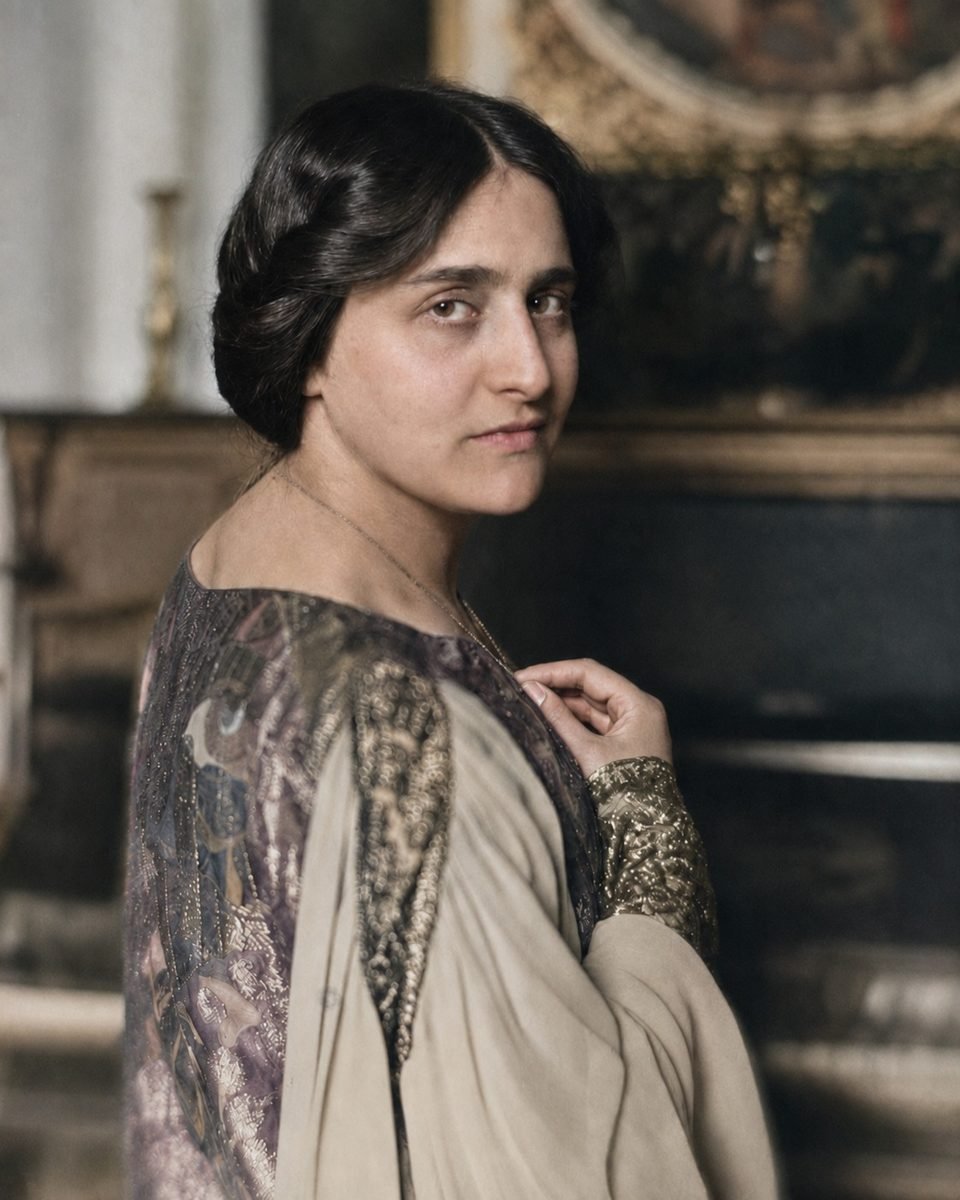
A BRIEF BIOGRAPHY
Dame Julia Myra Hess was born in London on February 25, 1890, and died there on November 25, 1965. One of the outstanding British pianists of the twentieth century, she became admired particularly for her interpretations of Bach, Mozart, Beethoven, Schumann and Brahms, and for an approach to music that combined intellectual seriousness, tonal beauty and an unusually direct emotional quality.
Born into a Jewish family and the youngest of four children, Myra Hess began piano lessons at the age of five. In 1903 she won a scholarship to the Royal Academy of Music, where she studied with the celebrated pedagogue Tobias Matthay. Her public orchestral debut came in 1907, when she appeared at Queen's Hall with Sir Thomas Beecham.
During the following three decades she established an international career on both sides of the Atlantic. But her name acquired an entirely different historical significance after the outbreak of the Second World War in 1939.
When London's normal cultural life virtually disappeared under blackout and the threat of bombing, Hess transformed the empty National Gallery into a concert hall. Between October 10, 1939 and April 10, 1946, an astonishing 1,698 concerts were presented there, attended by 824,152 people. They continued every weekday despite air raids, bomb damage and the disruption of wartime London.
For this extraordinary contribution to British musical and civic life, she was created Dame Commander of the Order of the British Empire in 1941.
But behind the dignified public figure was a surprisingly funny, mischievous and unconventional woman.
1. SHE WAS NOT JUST A CHILD PRODIGY — SHE WAS A REMARKABLY SERIOUS STUDENT
Myra Hess began piano lessons at five and progressed rapidly enough to enter professional musical education while still a child.
Her decisive step came in 1903, when she won a scholarship to the Royal Academy of Music.
There she encountered Tobias Matthay, one of Britain's most influential piano teachers, whose pupils also included Irene Scharrer, Harriet Cohen, Clifford Curzon and Moura Lympany.
The combination of Matthay's training and Hess's own natural musical intelligence helped create a pianist whose virtuosity rarely drew attention to itself.
2. HER FIRST MAJOR CONCERTO WAS BEETHOVEN'S FOURTH
At the age of seventeen, in 1907, Hess made her major public debut at Queen's Hall with Sir Thomas Beecham.
The concerto was Beethoven's Piano Concerto No. 4 in G major.
It was an extraordinarily appropriate work for her temperament.
Rather than beginning with orchestral thunder, Beethoven's Fourth opens with the pianist alone, quietly addressing the audience.
Hess's career would repeatedly demonstrate that she possessed an unusual capacity to command attention without resorting to theatrical display.
3. HER MISTAKE IN A MOZART CONCERTO PRODUCED A DELIGHTFUL HENRY WOOD STORY
Even great pianists take wrong turns.
As a young performer, Hess was playing a Mozart D minor Piano Concerto with conductor Sir Henry Wood when she lost her way during the first movement.
She was horrified.
Afterwards she apologized, convinced that the famous conductor would never engage her again.
Wood reassured her humorously that things could have been much worse: she might have wandered into the wrong movement entirely.
Hess remembered the incident decades later.
4. SHE PLAYED AT THE PROMS FOR NEARLY HALF A CENTURY
Myra Hess became one of the most familiar pianists in British concert life.
Beginning in 1916, she appeared extraordinarily frequently at the Promenade Concerts, eventually making about 95 appearances and continuing until 1961.
That alone places her career across an extraordinary span of musical history.
She began during the First World War and was still performing when the LP, stereo recording and television had completely transformed musical culture.
5. AMERICA BECAME A SECOND MUSICAL HOME
Hess made her first American appearances in New York in January 1922.
She had worried beforehand that American audiences, accustomed to glamorous international virtuosi, might not respond to her comparatively understated public personality.
She need not have worried.
Her success led to repeated visits, and over the following decades she travelled to the United States approximately forty times, often remaining there for months.
She became one of the comparatively small number of British pianists to achieve enduring major status in American concert life.
6. A SHORT BACH TRANSCRIPTION BECAME HER MOST FAMOUS COMPOSITIONAL LEGACY
Millions of people who may never have heard the name Myra Hess have probably heard her most famous arrangement.
She transcribed for piano the chorale popularly known in English as Jesu, Joy of Man's Desiring, taken from Johann Sebastian Bach's Cantata BWV 147.
Her piano-solo arrangement appeared in 1926, followed later by a duet version.
The transcription became enormously popular and remains one of the most widely played Bach arrangements for piano.
7. SHE DISLIKED RECORDING
This is particularly ironic because Hess left some treasured recordings.
Yet she did not enjoy the recording process.
Pianist Marshall Izen recalled asking her why she made relatively few records.
Her memorable response was:
“I hate them. I feel like I’m going to my own funeral when I hear myself play.”
For Hess, music was fundamentally a living interaction between performer and audience rather than an object frozen permanently on disc.
8. WHEN WAR BEGAN, SHE INITIALLY PLANNED TO CLOSE HER PIANO
The story of the famous National Gallery concerts began surprisingly.
When war broke out in September 1939, Hess initially considered giving up performing for the duration of the conflict.
At a tea gathering with friends, including refugees from continental Europe, she thought she might play for them once and then close the lid of her grand piano.
Her friends protested.
Music, they argued, was needed more than ever.
The episode helped move Hess toward the idea that playing the piano during wartime could itself constitute a form of public service.
9. SHE WENT TO THE NATIONAL GALLERY WITH A RADICAL IDEA
The National Gallery's paintings had been evacuated for safety.
The immense rooms stood strangely empty.
Hess approached Gallery director Sir Kenneth Clark with the suggestion that music could replace the missing paintings.
Clark immediately understood the possibilities.
Instead of allowing the Gallery to become merely another government office, they would turn it into a place where Londoners could continue experiencing beauty.
10. THE FIRST CONCERT WAS ALMOST ORGANIZED AS THOUGH NOBODY MIGHT COME
The first National Gallery concert took place on October 10, 1939.
Hess herself decided to play because, as she remembered, she feared the whole enterprise might be a flop.
Instead, organizers looked outside before the concert and discovered a queue stretching down the Gallery steps and around Trafalgar Square.
The experiment had become an institution almost instantly.
11. YOU COULD HEAR WORLD-CLASS MUSIC FOR ONE SHILLING
Hess deliberately wanted the concerts to reach people who normally could not afford prestigious classical performances.
Admission was therefore set at only one shilling.
Office workers could come during lunch.
People were allowed to enter and leave informally.
They could even bring their lunch with them.
The concerts therefore did something socially important as well as musically important: they brought first-rate classical music to a much wider public.
12. 1,698 CONCERTS — WITHOUT MISSING A WEEKDAY
What began as an emergency experiment lasted six and a half years.
From October 10, 1939 to April 10, 1946, concerts took place every weekday.
There were 1,698 performances.
Total attendance reached 824,152.
The repertoire stretched from sixteenth-century music to contemporary works.
Those numbers alone would constitute an impressive concert series under normal conditions.
These concerts took place while London was at war.
13. A TIME BOMB COULD NOT STOP THE MUSIC
On October 15, 1940, Hess was informed that a time bomb had fallen on the National Gallery and the building had to be evacuated.
That appeared likely to break the continuous sequence of concerts.
It did not.
Within approximately half an hour an alternative venue had been found at nearby South Africa House.
A boy was positioned in Trafalgar Square to redirect the audience.
Hundreds followed him and heard the scheduled musicians perform Mozart there instead.
14. A 1,000-POUND UNEXPLODED BOMB DID NOT CANCEL A CONCERT EITHER
Only a few days later, on October 18, 1940, another unexploded bomb was discovered in the Gallery wreckage.
It weighed about 1,000 pounds.
The response?
The audience was moved to another part of the building, where the Menges String Quartet performed while bomb-disposal work continued elsewhere.
That gives some sense of the extraordinary mentality surrounding the series.
15. A BOMB EXPLODED DURING BEETHOVEN — AND THE QUARTET KEPT PLAYING
On October 23, 1940, a bomb exploded within the National Gallery complex while a concert was actually taking place.
A Beethoven quartet was being performed.
According to a surviving account, the audience remained in place and the Stratton Quartet continued playing without interrupting the performance.
The story became almost a perfect symbol of London's wartime concerts:
Beethoven on one side of the wall; war on the other.
16. HER ONE-WORD TELEGRAM TO HOWARD FERGUSON: “HELP”
Organizing a concert every weekday soon became impossible for one person.
Hess therefore contacted her friend, composer and pianist Howard Ferguson.
Her message contained one word:
“Help.”
Ferguson responded and became crucial to the programming and administration of the National Gallery series.
Years later Hess marvelled that the two had managed to work side by side for six and a half years without actually hitting each other.
17. SHE MADE A SLIP OF THE TONGUE — AND COULD NOT STOP LAUGHING
Her friend and fellow pianist Irene Scharrer once had to replace a male performer at short notice.
Hess went before the audience to thank her.
She intended to explain that Scharrer had stepped into the absent musician's place.
Instead, she thanked her for stepping into his “breeches.”
Hess immediately realized the unintended double meaning, collapsed into laughter, and the audience joined her.
It is difficult to reconcile this image with the austere, dignified woman seen in many formal photographs — which is exactly what makes the story so delightful.
18. SHE COULD PLAY THE PIANO UPSIDE DOWN
Offstage, Hess possessed a mischievous streak almost completely absent from her public image.
Friends recalled that she could entertain guests with strange pianistic party tricks.
Among them was playing the piano upside down.
She also experimented with playing while an orange was tucked beneath one hand.
The pianist celebrated for noble Beethoven and profound Brahms could therefore become a comedian as soon as the formal concert was over.
19. HER QUEEN VICTORIA IMPERSONATION WAS A PRIVATE FAVOURITE
Hess was apparently a talented mimic.
Friends remembered her gift for accents and impersonations.
One of her specialties was Queen Victoria.
For the performance, Hess reportedly placed a lace doily on her head and adopted an appropriately grim expression.
Her friends evidently saw a very different Myra Hess from the solemn figure familiar to concert audiences.
20. SOME MUSICIANS CALLED HER “AUNTIE”
The National Gallery concerts created something resembling a musical family.
Members of the distinguished Griller Quartet, who performed regularly in the series, affectionately referred to Hess as “Auntie.”
The nickname is revealing.
She was not simply the celebrity pianist whose name appeared on posters.
She was the person who telephoned musicians, solved emergencies, found substitutes, organized programs and ensured that the concerts happened regardless of circumstances.
21. THE CONCERTS EVEN HAD A WARTIME CANTEEN
Music was not the only attraction.
A canteen was established at the National Gallery soon after the concerts began.
Volunteers prepared tea, coffee and food for audiences, and among those helping was actress and comedian Joyce Grenfell.
Money generated by the canteen went to wartime charities, eventually raising a substantial sum.
One could therefore enter an almost empty National Gallery during the Blitz, eat a sandwich, hear world-class chamber music and then return to work.
22. THE CONCERTS ALSO KEPT MUSICIANS WORKING
Hess understood that wartime cultural closures threatened not only audiences but professional musicians.
If theatres and concert halls remained closed, performers could lose their livelihoods.
The National Gallery concerts therefore provided work for established musicians and performance opportunities for younger artists.
Any profits were directed to the Musicians Benevolent Fund.
For Hess, this was not charity separate from music.
It was part of the same mission.
23. THE QUEEN ATTENDED THE 1,000TH CONCERT
The thousandth National Gallery concert took place on July 23, 1943.
By then the series had become a national institution.
The Queen attended the celebration.
What had begun less than four years earlier as an uncertain experiment had become an internationally recognized symbol of Britain's wartime cultural resilience.
24. SHE BECAME A DAME BECAUSE MUSIC HAD BECOME PUBLIC SERVICE
Hess had already been honoured with a CBE in 1936.
But in 1941, at the height of the war, King George VI appointed her a Dame Commander of the Order of the British Empire for services to music.
From that moment she became universally known as Dame Myra Hess.
The title recognized something exceptional: a concert pianist had effectively become a figure of national morale.
25. SHE WAS TOO EMOTIONAL TO PLAY AT THE FINAL CONCERT
The last National Gallery wartime concert took place on April 10, 1946.
One might naturally expect Hess herself to have played.
She deliberately did not.
She feared that the emotional significance of the occasion would overwhelm her and therefore gave the final performance to the Griller Quartet, who had been closely associated with the concerts from the beginning.
At the farewell Hess described the previous six and a half years as the greatest privilege a musician could hope to experience.
26. SHE AND ARTURO TOSCANINI COULD NOT AGREE ABOUT BEETHOVEN
After the war, Hess returned fully to international concert life.
In 1946, she was invited to appear with Arturo Toscanini and the NBC Symphony Orchestra.
They originally considered Beethoven's Fifth Piano Concerto, “Emperor.”
But pianist and conductor could not agree satisfactorily on tempos.
Instead they changed the concerto and performed Beethoven's Piano Concerto No. 3 in C minor on November 24, 1946.
Two formidable musicians had solved an artistic disagreement in the most practical possible way: change the piece.
27. HER BRAHMS WITH BRUNO WALTER BECAME LEGENDARY
Hess's late career contained some of her most admired playing.
In 1951 she performed Brahms's Piano Concerto No. 2 in B-flat major with the New York Philharmonic under Bruno Walter.
The performance survives and has acquired almost legendary status among admirers of her playing.
It demonstrates the qualities for which Hess was admired: structural command, weight without heaviness, a richly singing tone and a complete absence of superficial virtuoso display.
28. SHE WAS A MAGNIFICENT CHAMBER MUSICIAN
Hess should never be remembered only as a solo pianist.
She loved chamber music and collaborated with many of the greatest musicians of her generation.
At the Prades Festival in 1952, for example, she played Brahms trios with musicians including Pablo Casals, Isaac Stern and Joseph Szigeti.
Her personality was especially suited to chamber music because she did not treat accompaniment as a secondary role.
She listened.
29. HER GREATEST PERFORMANCES MAY NOT BE ON HER STUDIO RECORDS
Because Hess disliked the recording studio, her discography presents only a partial portrait.
Those who knew her frequently believed that she was much more compelling before a live audience.
The tension of a concert seemed to awaken qualities that the studio could inhibit.
This is why surviving broadcasts and live recordings are particularly valuable in assessing her artistry.
The paradox is fascinating:
One of the twentieth century's most admired pianists left comparatively little recorded evidence of what contemporaries considered her greatest quality — the spontaneous electricity of the moment.
30. HER PUBLIC IMAGE AND PRIVATE PERSONALITY WERE ALMOST OPPOSITES
Photographs often show Myra Hess as a grave, dignified woman sitting solemnly at a piano.
Onstage she projected seriousness and composure.
Offstage, friends remembered warmth, irreverence, impressions, jokes, strange piano tricks and spontaneous laughter.
This duality is important.
Hess's seriousness toward music should not be confused with personal solemnity.
She took music extremely seriously.
She did not always take herself seriously.
THE PIANO ART OF MYRA HESS
Myra Hess belonged to a pianistic world very different from that of the modern competition virtuoso.
She did not cultivate spectacular speed for its own sake.
She did not seek enormous sonority simply to impress.
And she possessed little interest in turning herself into a glamorous public personality.
Her priorities were musical architecture, tonal differentiation, rhythmic life, phrasing and spiritual intensity.
In Beethoven, she could combine massive structural authority with astonishing intimacy.
In Schumann, her playing revealed imagination without sentimentality.
In Brahms, she found weight, tenderness and chamber-like transparency.
In Mozart, she sought simplicity without superficiality.
And in Bach, she could make the modern piano sing contrapuntally while retaining a deeply Romantic conception of tone.
The surviving recordings of Beethoven's late sonatas, Schumann's Carnaval, Brahms and her chamber collaborations preserve some of these qualities, although those who heard her live often insisted that records captured only part of her impact.
MYRA HESS AND THE BLITZ — WHEN MUSIC BECAME AN ACT OF RESISTANCE
What distinguishes Myra Hess from almost every other great pianist is that the defining achievement of her life occurred partly away from the keyboard.
She understood that during a national catastrophe, the preservation of culture was not a luxury.
It had psychological importance.
While paintings were hidden underground and German aircraft bombed London, people still walked through rubble to Trafalgar Square, paid one shilling, sat together and listened to Bach, Mozart, Beethoven, Schumann and Brahms.
The National Gallery itself was struck by bombs.
The concerts continued.
Unexploded bombs were discovered.
The concerts continued.
Rooms became unusable.
The concerts continued.
Musicians were called into military service.
Others replaced them.
The concerts continued.
It was not heroic in the conventional military sense.
But it asserted something fundamental:
civilization would continue.
THE ESSENCE OF DAME MYRA HESS
The life of Dame Myra Hess, from February 25, 1890, to November 25, 1965, joined two extraordinary stories.
The first was the career of a great pianist.
The second was the story of what a musician could mean to society beyond the concert platform.
She studied with Tobias Matthay, debuted with Thomas Beecham, collaborated with conductors such as Henry Wood, Arturo Toscanini and Bruno Walter, and played chamber music with figures such as Pablo Casals, Isaac Stern and Joseph Szigeti.
But history remembers something else as well.
Between 1939 and 1946, she helped create 1,698 concerts in the middle of a city under attack.
More than 824,000 people attended them.
For many Londoners, the sound of a piano or string quartet inside the National Gallery became evidence that normal human values had survived another night of bombing.
That is why Myra Hess occupies a unique place in musical history.
She demonstrated that a pianist can offer an audience more than beauty, virtuosity or interpretation.