9 May 2026
Giuseppe Verdi In Russia
On Classicapedia: Giuseppe Verdi, Enrico Tamberlik, Giuseppina Strepponi
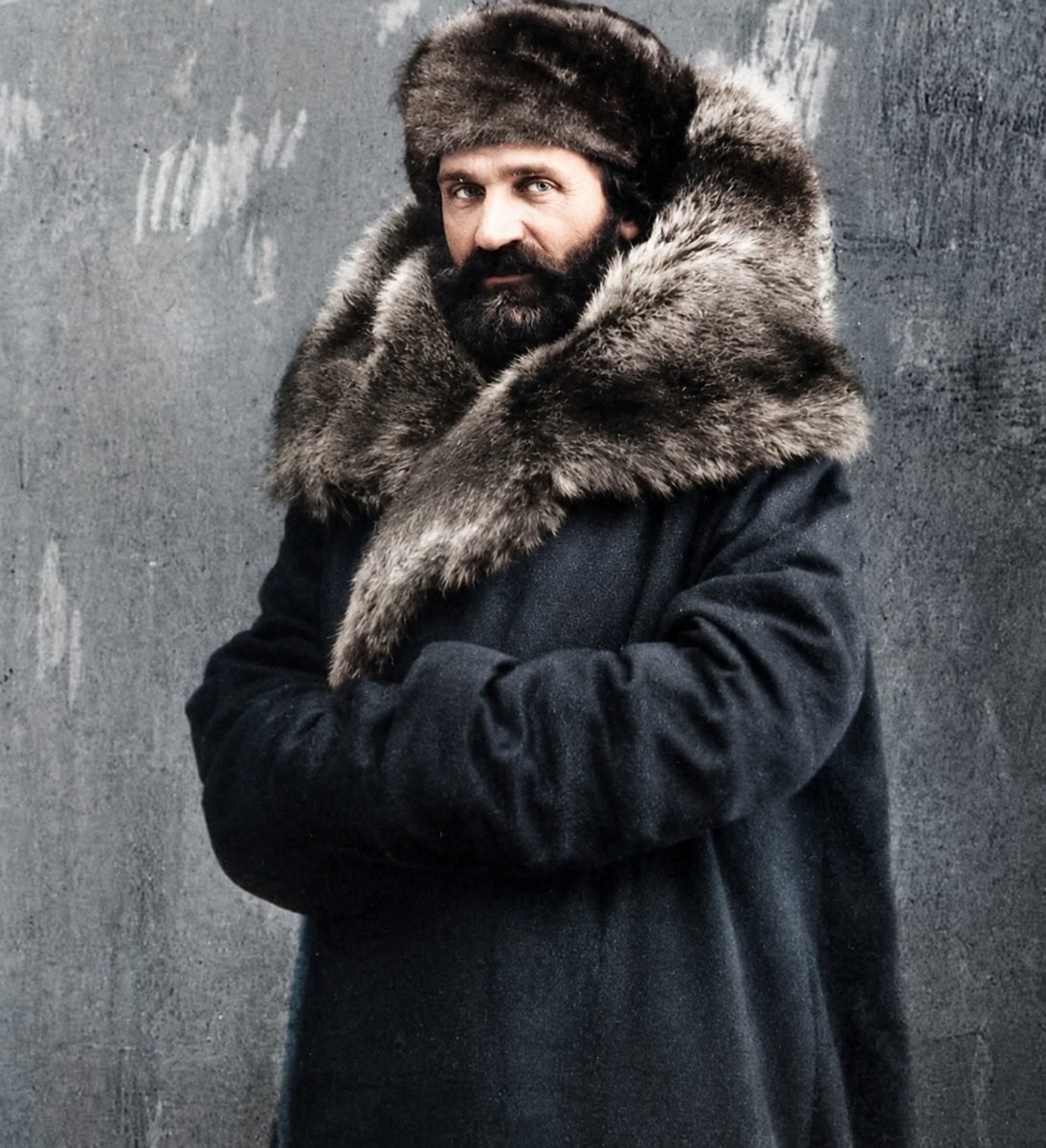
Giuseppe Verdi in Russia: the St. Petersburg Adventure, La forza del destino, and the Opera That Changed Shape
Giuseppe Verdi's Russian episode was brief in duration but highly important in artistic consequence. Unlike some nineteenth-century composers who built long careers through repeated foreign appointments, Verdi's contact with Russia was concentrated around one great project: La forza del destino, commissioned for the Imperial Theatre of St. Petersburg and premiered there in 1862. It was not merely a prestigious foreign commission; it came at a delicate moment in Verdi's life, after the enormous patriotic pressures of the Italian Risorgimento and after his reluctant entry into political life. A modern La Scala/Conservatorio di Milano programme note states that the commission reached Verdi through the celebrated tenor Enrico Tamberlik and that it offered him a way to leave behind the forced experience of parliamentary life, especially after Cavour's death.
Russia therefore represented escape, prestige, money, distance, and artistic risk. St. Petersburg was one of the great imperial capitals of Europe, with a strong appetite for Italian opera and a courtly theatrical culture capable of paying generously for international stars. Verdi, already famous across Europe, was being asked to write not for Milan, Venice, Naples, Paris, or London, but for the Russian imperial stage. The result was one of his darkest and most unpredictable operas: a work of coincidence, guilt, war, religion, revenge, disguise, and fatality.
The Commission: Why Russia Wanted Verdi
The commission for St. Petersburg shows how international Verdi's reputation had become by the early 1860s. By then he was no longer only the composer of Italian patriotic opera. He was the creator of Rigoletto, Il trovatore, La traviata, Les vêpres siciliennes, Simon Boccanegra, Un ballo in maschera, and other major works. His operas were performed widely, and the Russian imperial theatre wanted the prestige of a new work by the greatest living Italian opera composer.
The role of Enrico Tamberlik was crucial. Tamberlik, a famous heroic tenor associated with St. Petersburg, helped connect Verdi with the Russian commission. The project became La forza del destino, with a libretto by Francesco Maria Piave, based mainly on Don Álvaro o la fuerza del sino by the Duke of Rivas, with one scene adapted from Schiller's Wallensteins Lager.
The choice of subject was revealing. Verdi did not offer the Russians a light court opera, nor a conventional love tragedy. He chose a sprawling Spanish-Romantic drama about fate, family honour, accidental death, vengeance, religious refuge, military life, and spiritual desolation. The Russian commission therefore produced one of Verdi's most European operas: Spanish source, Italian libretto, Schillerian addition, French grand-opera breadth, and Russian premiere.
1861: The First Journey to St. Petersburg
Verdi worked quickly on the score. Ricordi's critical-edition notes state that Verdi wrote to friends in 1861 saying that he had "completed" the opera for St. Petersburg, although, as often happened with him, he still intended to finish details of the orchestration during rehearsals.
In December 1861, Verdi travelled to St. Petersburg, accompanied by Giuseppina Strepponi. The journey itself was a major undertaking. This was not an easy modern trip but a long winter journey from Italy to the Russian imperial capital. One must imagine Verdi, a man deeply attached to Sant'Agata and often suspicious of theatrical bureaucracy, now crossing Europe to supervise rehearsals in a distant, cold, aristocratic city whose operatic customs were not his own.
The anecdote that defines this first Russian visit is one of delay and frustration. The premiere was supposed to take place during that season, but the soprano scheduled to sing Leonora, Emilia La Grua, became seriously ill. Ricordi's critical edition specifically notes that when La Grua fell ill, Verdi left Russia and carried the score back with him to Sant'Agata.
This was more than an inconvenience. Verdi believed strongly in singers. He did not compose abstractly and then leave the theatre to solve everything. A role like Leonora required the right voice, the right temperament, and the right dramatic authority. Without the correct soprano, the opera could not be launched properly. Thus, Verdi's first Russian journey ended not in triumph, but in postponement.
The Nine-Month Delay: Frustration and Revision
The postponement lasted many months. Interlude's account of the premiere notes that Verdi had departed for St. Petersburg in December 1861, but that the scheduled premiere had to be delayed for nine months because the soprano engaged for Leonora became gravely ill. Verdi returned to Italy via Paris and made structural changes before the opera finally reached the stage in November 1862.
This delay is one of the most revealing curiosities of the Russian episode. It shows Verdi's practical theatrical mind. Many composers might have simply waited. Verdi instead took the score away and continued thinking. He was not a passive victim of circumstance. He used the delay to reconsider the work. La forza del destino was already large, complicated, and structurally unusual; the extra months allowed Verdi to refine the opera before its eventual premiere.
There is also a psychological side. Verdi disliked uncertainty. He distrusted theatre administrators, worried about singers, and understood that a first performance could determine the fate of an opera. The Russian delay would have confirmed everything he already knew about opera: no genius, no score, no contract could succeed without the right cast and the right theatrical moment.
1862: The Return to Russia
Verdi returned to Russia in 1862 for the postponed premiere. The new Leonora was Caroline Barbot, and the premiere cast included several important singers: Enrico Tamberlik as Don Alvaro, Francesco Graziani as Don Carlo, Constance Nantier-Didiée as Preziosilla, and Achille De Bassini as Fra Melitone. The opera was conducted by Edoardo Bauer, also given in some sources as Baveri.
This cast reveals the international character of the St. Petersburg Italian opera scene. The Russian imperial theatre was not asking Verdi to become a Russian composer; it was importing the prestige of Italian opera into an imperial context. St. Petersburg could assemble international singers, offer a prestigious stage, and present a new Verdi opera as a cultural event.
The premiere took place at the Bolshoi Kamenny Theatre in St. Petersburg. The date is often given as 29 October 1862 according to the Russian Old Style calendar, corresponding to 10 November 1862 New Style.
The Premiere: Success, Doubt, and a Troubling Ending
The premiere of La forza del destino was important, but it was not the kind of uncomplicated triumph that Verdi preferred. The opera's vast scale, mixture of tragic and comic elements, abrupt changes of scene, and extreme fatalism made it difficult to absorb immediately. Interlude notes that the premiere finally took place in St. Petersburg in November 1862, but that Verdi was immediately unhappy with the audience's reaction to the ending, where the original version culminated in three violent deaths.
This is one of the most important anecdotes in the history of the opera. Verdi sensed that the ending was theatrically problematic. In the original St. Petersburg version, the catastrophe was almost unbearably bleak: the opera seemed to drive all its principal figures toward destruction. Fate did not merely govern the drama; it crushed it. The public's reaction suggested that the final accumulation of death might be too much even for an opera called La forza del destino (The Force of Destiny).
This discomfort eventually mattered. La forza del destino would later be revised for La Scala in 1869, with important changes including a new overture and a different ending in which Alvaro does not throw himself to his death. The revised Milan version, premiered on 27 February 1869, became the standard version.
Thus Russia gave birth to the opera, but Italy later reshaped it. The St. Petersburg Forza was the origin; the Milan Forza was the form in which the work largely survived.
The Opera Itself: Why Russia Produced Such a Dark Work
It is tempting to imagine that the Russian setting of the commission influenced the darkness of La forza del destino. The opera is not Russian in subject, language, or musical idiom, but its vastness and fatalism perhaps suited an imperial stage accustomed to large-scale drama. The work is broader and more episodic than many earlier Verdi operas. It moves through aristocratic interiors, inns, monasteries, military camps, battlefields, and hermit-like isolation. It combines private guilt with public war, comic friars with tragic vows, popular choruses with metaphysical fatality.
One of Verdi's own comments after the premiere is telling. The Metropolitan Opera notes that shortly after the St. Petersburg premiere, Verdi described La forza del destino as "an opera of vast dimensions" that needed great care.
That phrase captures the central truth. La forza is not a compact domestic tragedy like La traviata. It is not a tight political thriller like Rigoletto. It is a large and unstable world, where human beings repeatedly try to act freely but are driven into catastrophe by accident, honour, revenge, and spiritual terror.
Anecdote: Verdi and the Russian Cold
The Russian journey has often been imagined through the contrast between Verdi's Italian rural identity and St. Petersburg's northern winter. Verdi was a man of the land, deeply connected to Sant'Agata, practical, suspicious of unnecessary luxury, and often impatient with courtly ceremony. St. Petersburg was distant, aristocratic, expensive, and climatically severe.
Although one should avoid turning this into folklore, the image is historically evocative: Verdi, the farmer-composer of Sant'Agata, in the imperial capital of the Tsars, waiting on singers, rehearsals, contracts, and weather.
The contrast helps explain why the first trip must have been frustrating. Verdi had crossed Europe for a premiere that could not happen. The cold, the distance, and the illness of the soprano turned the commission into a test of patience. But such discomfort also belongs to the practical history of opera. Great works are not born only from inspiration; they are born from missed rehearsals, sick singers, delayed premieres, financial arrangements, and stubborn composers who refuse to compromise.
Anecdote: The Soprano Problem
The illness of Emilia La Grua is more than a logistical detail. It shows how dependent nineteenth-century opera was on individual singers. Today we often think of an opera as a fixed work. In Verdi's time, an opera was also a living theatrical machine built around available voices. A different soprano could alter timing, expression, balance, and even structure.
When La Grua became ill, the entire enterprise stopped. Verdi did not allow the premiere to proceed badly. Later, with Caroline Barbot as Leonora, the work reached the stage. But even then, reports suggest that the reception did not fully match expectations, and some dissatisfaction surrounded the casting. A Spanish account of the opera's history notes that the opera returned to Russia in late summer 1862 with Carolina Barbot, chosen by Verdi, but that the premiere's reception did not fully meet the expectations created around it.
This is classic Verdi: he wanted voices, not abstract casting. The Russian episode confirms his lifelong belief that opera lives or dies through the human singer.
Curiosity: The St. Petersburg Version Is Not the Version Most People Know
One of the most important curiosities is that most listeners know La forza del destino through the 1869 Milan revision, not through the original St. Petersburg version. The familiar orchestral overture belongs to the revised version; the original had a shorter prelude. The ending also changed substantially. In the revised version, Alvaro survives and seeks spiritual submission rather than dying by suicide.
This means that Russia occupies a paradoxical place in Verdi's career. St. Petersburg gave the opera its first life, but La Scala gave it its lasting shape. The Russian version was more violently fatalistic. The later version was more spiritually resolved. The difference is not cosmetic; it changes the meaning of the opera. In the Russian version, fate seems almost absolute. In the revised version, the final catastrophe opens toward renunciation, prayer, and transcendence.
Thus, the Russian episode led Verdi toward one of his most important acts of self-criticism. He did not simply write an opera and abandon it. He listened to the theatre, judged the reaction, and later reshaped the work. Verdi's genius was not only creative; it was revisionary.
Chronology of Verdi's Russian Episode
Early 1860s — The commission for a new Verdi opera reaches him through the St. Petersburg operatic world, with the important mediation of Enrico Tamberlik.
December 1861 — Verdi travels to St. Petersburg with Giuseppina Strepponi for the planned premiere of La forza del destino. The opera cannot be premiered because Emilia La Grua, the soprano engaged for Leonora, becomes seriously ill. Verdi leaves Russia and takes the score back to Sant'Agata.
Late 1862 — Verdi returns to Russia for the postponed premiere, now with Caroline Barbot as Leonora.
29 October / 10 November 1862 — La forza del destino receives its world premiere at the Bolshoi Kamenny Theatre in St. Petersburg. The date is given as 29 October Old Style and 10 November New Style.
1863 — The opera begins its life outside Russia, appearing in Rome under the title Don Alvaro.
27 February 1869 — The revised version is premiered at La Scala, Milan, with a new overture, structural changes, and a revised ending. This becomes the standard version known today.
Russia's Place in Verdi's Career
Russia did not transform Verdi into a Russian-influenced composer. There is no equivalent in Verdi's life to Dvořák's American period, or to Berlioz's deep connection with Russian patronage and audiences. Verdi's Russian stage was more focused and more practical: one commission, one major opera, one delayed premiere, and one long afterlife.
But it matters greatly because La forza del destino stands at a key point in his development. It comes after the compact masterpieces of the 1850s and before the later monumental works Don Carlos, Aida, Otello, and Falstaff. It shows Verdi experimenting with wider dramatic architecture, more dispersed action, and a darker metaphysical atmosphere. It is not always perfectly balanced, but its very imbalance is part of its power.
Russia gave Verdi the occasion to create one of his strangest works: an opera that seems to be constantly pursued by the force it names.
Conclusion: The Russian Detour That Created a Verdian Monument
Verdi's Russian episode was short, but it produced a major operatic monument. It began with an international commission from St. Petersburg, was shaped by the mediation of Enrico Tamberlik, was interrupted by the illness of Emilia La Grua, required Verdi to travel to Russia twice, and culminated in the 1862 premiere of La forza del destino at the Bolshoi Kamenny Theatre.
The Russian premiere did not give Verdi a final, settled masterpiece. Instead, it gave him a problem — and that problem eventually produced the 1869 revision. This is perhaps the most Verdian aspect of the whole story. Verdi was never merely inspired; he was theatrical, practical, and unsentimental. He knew when something had not fully worked. He returned, revised, strengthened, and clarified.
Russia therefore occupies a unique place in Verdi's biography. It was not a long chapter, but it was a decisive one. In St. Petersburg, Verdi confronted a new scale, a new imperial public, and a drama in which fate seemed to outgrow human will. The result was one of his most troubling and unforgettable operas: an opera born in Russia, revised in Italy, and destined for the world.