15 April 2026
The Childhood of Felix Mendelssohn (II): The Education of a Genius (1817–1821)
On Classicapedia: Felix Mendelssohn, Carl Friedrich Zelter, Johann Wolfgang von Goethe, Fanny Mendelssohn, Johann Sebastian Bach
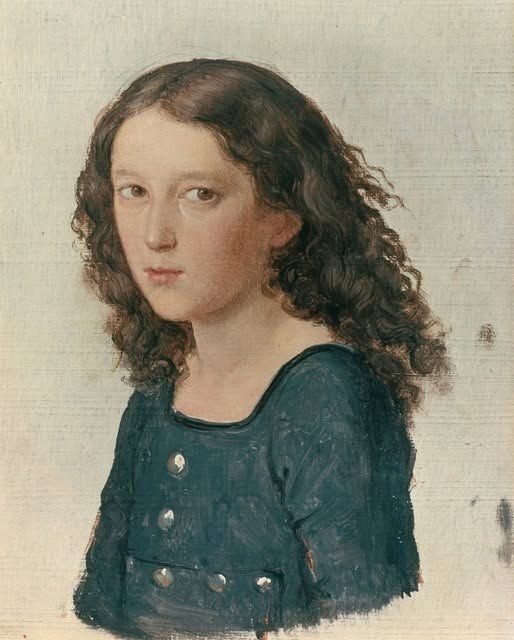
“The Education of Genius” (1817–1821)
Chapter 8: The Discipline of Carl Friedrich Zelter
By 1817, when Felix was eight years old, his father decided that the time had come for professional instruction. Through family friends, he was introduced to Carl Friedrich Zelter, conductor of the Berlin Singakademie, composer, and one of the city’s most respected musicians. Zelter was a close friend of Goethe and a devout follower of Johann Sebastian Bach, whose music he had helped revive decades before Mendelssohn’s generation would rediscover it fully.
When Zelter first met the boy, he was skeptical. “Another precocious child,” he muttered. But after hearing Felix play and improvise, his attitude changed. He later told Goethe,
“I have a little fellow who might one day bring back the spirit of Sebastian Bach himself.”
Zelter’s teaching was exacting. He emphasized harmony, counterpoint, and structure — the grammar of music. He made Felix copy out Bach fugues, chorales, and canons until the rules of voice-leading became second nature. But his strictness was balanced by admiration; he recognized that Felix’s intelligence transformed study into art.
Unlike his father, who had driven him through lessons as a showpiece, Zelter saw in Felix something deeper — not the virtuoso, but the composer. He insisted that talent without discipline was “a bird without wings.” Under his guidance, Felix learned to think of music as architecture: order sustained by beauty.
Chapter 9: The Formation of a Musical Mind
The years 1817–1818 were years of growth and wonder. Felix absorbed everything: Bach’s sacred music, Mozart’s symphonies, Beethoven’s early sonatas, and the choral works of Handel. His reading habits mirrored his listening — Shakespeare, Schiller, and the German poets became his companions. His education extended far beyond music; he was fluent in Greek and Latin, and at twelve could translate passages of Homer.
But it was through music that his imagination expressed itself. Zelter encouraged him to compose small pieces each week. The earliest manuscripts — minuets, fugues, and songs — reveal not childish imitation but an astonishing grasp of proportion and clarity. Already, Felix’s writing displayed balance, lyricism, and an instinct for harmonic surprise that would define his mature style.
At home, he continued to play with his sister Fanny. Their duet performances became a daily ritual, and the two exchanged musical ideas freely. When Felix wrote a piano fugue, Fanny would critique the counterpoint; when she composed a song, Felix suggested harmonic changes. They were equals, though society would later deny Fanny the professional life open to her brother.
Chapter 10: The Family as a Microcosm of Culture
The Mendelssohn house in Berlin was unlike any other. Located on Leipziger Strasse, it became a salon of artistic and intellectual refinement. Abraham Mendelssohn, though a banker, viewed culture as the highest form of wealth. He filled his home with books, art, and music. His wife, Lea, presided over it with warmth and quiet authority.
On Sundays, the family gathered in the music room — a large, high-ceilinged salon with portraits of Mozart, Bach, and Lessing on the walls, and two grand pianos placed side by side. There, before a small audience of relatives and friends, Felix and Fanny performed works old and new. These gatherings evolved into the famous Sunday Musicales — private concerts that soon drew the elite of Berlin’s intellectual world.
Writers, philosophers, and musicians attended: Hegel, Heinrich Heine, Humboldt, and occasionally Zelter himself. They came not merely to hear precocious children, but to witness an atmosphere of art and intellect perfectly balanced — a living embodiment of the Enlightenment’s ideal of the cultivated home.
Felix’s performances astonished all who heard them. He played not with the intensity of a prodigy, but with the poise of a mature artist. His touch was clear and singing, his phrasing already marked by architectural intelligence. When he improvised, his music flowed with natural grace — spontaneous yet formally complete. One listener wrote,
“He does not play like a child, but like a poet who has found his instrument.”
Chapter 11: The Early Compositions
Between 1818 and 1820, Felix’s output multiplied at a breathtaking rate. By the age of eleven, he had composed twelve string symphonies, numerous piano pieces, and several songs. These symphonies, written for the family orchestra under Zelter’s guidance, show the astonishing early grasp of orchestral texture that would later culminate in works like the Midsummer Night’s Dream Overture.
Each new symphony was premiered at the Mendelssohn home, performed by a small ensemble of family friends, tutors, and even servants trained as musicians. Felix himself conducted from the keyboard or the first violin desk, while Fanny often played the piano part.
Zelter watched these developments with both pride and astonishment. He told Goethe that the boy’s creative speed rivaled that of Mozart, but that his craftsmanship was even more meticulous. Indeed, Felix’s childhood works reveal not the wild experimentation of genius untamed, but clarity of thought united with natural elegance — the hallmark of classical balance within the Romantic spirit.
Chapter 12: Friendship and Mentorship — Zelter and Goethe
In 1821, when Felix was twelve, Zelter brought him to Weimar to meet his friend Johann Wolfgang von Goethe, then in his seventies and the patriarch of German letters. Goethe had long been fascinated by young musicians, having met Mozart in his youth. When the twelve-year-old Mendelssohn entered his home, Goethe was enchanted.
Zelter described the encounter vividly:
“Felix played to him, and the old man listened with tears in his eyes. He said, ‘Once I saw the boy Mozart, and now, once again, I have seen the same.’”
Goethe’s words were not idle flattery. He saw in Felix something rare — a combination of intellect and emotional balance, the harmony of thought and feeling that Goethe called Bildung (inner cultivation). For days, the young boy performed for the poet, playing Bach, Beethoven, and his own compositions. Goethe, who valued order and light, felt that Mendelssohn embodied the very spirit of classical serenity.
This visit marked a symbolic moment: the torch of the German Enlightenment — passed from Bach to Goethe to Zelter — now shone in the hands of a new generation. Felix, barely twelve, was already being hailed as the natural heir of the German musical tradition.
Chapter 13: A Portrait of Family Harmony
The Mendelssohn family during these years represented one of the most remarkable households in European cultural history. Wealth and intellect were fused with moral restraint and artistic dedication. Abraham insisted that his children’s talents be cultivated but never exploited. He discouraged public showmanship, insisting that “music must remain an inner necessity, not a social ornament.”
This ethos shaped Felix’s character. Even as a boy, he was modest, polite, and self-disciplined. He woke early, studied languages before breakfast, practiced piano and composition, and spent afternoons in nature or conversation. His manners were elegant but unpretentious, and his humor gentle. He was a child of order, yet filled with creative fire.
Friends described the Mendelssohn home as “an island of beauty in a restless world.” And indeed, Berlin in those years was undergoing change — the Napoleonic wars had ended, and Germany stood at the dawn of cultural nationalism. The young Mendelssohns embodied a new vision of art: rational yet inspired, classical yet alive.
Chapter 14: The Child Becomes the Artist
By the end of 1821, Felix was no longer merely a gifted boy. His command of form and harmony rivaled that of professional composers. Zelter, though famously harsh, admitted,
“He already knows all I can teach him.”
The family’s musicales now featured not only his piano playing but his compositions — symphonies, quartets, and songs that revealed maturity beyond his years. He began conducting small ensembles and leading rehearsals with calm authority. The boy who once watched his mother at the keyboard had become Berlin’s most astonishing young musician.
And yet, beneath the brilliance, Felix remained humble. He never boasted, never demanded attention. His genius was natural, not performative. Like Mozart, he made art seem effortless; like Bach, he made it sacred.