24 March 2026
Semyon Bychkov: The Maestro Of Fire and Exile Who Made Tragedy Sing
On Classicapedia: Semyon Bychkov, Ilya Musin
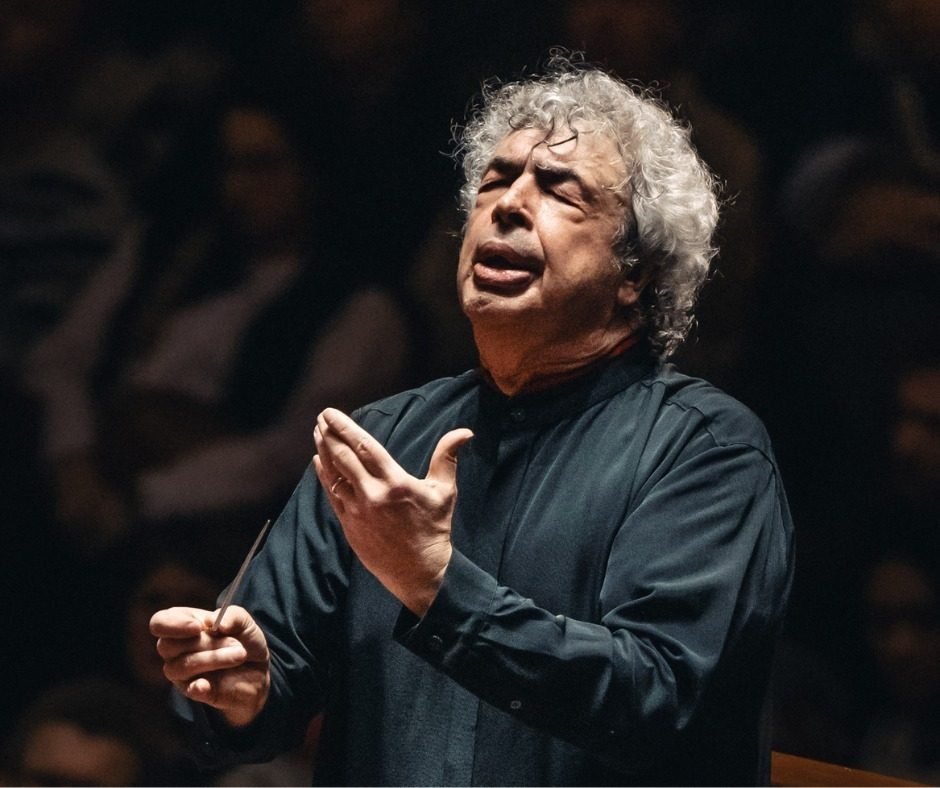
There are conductors whose greatness lies in polish, and there are others whose art seems born from fracture, displacement, and the hard-won union of intellect with emotion. Semyon Bychkov belongs unmistakably to that second category. Born in Leningrad on 30 November 1952, he emerged from the Soviet system, left it under pressure, rebuilt himself in the West, and became one of the most distinguished conductors of his generation. He is currently Chief Conductor and Music Director of the Czech Philharmonic, is set to become Music Director Designate of the Opéra national de Paris from 1 August 2026 and Music Director there from 1 August 2028, and also holds the Otto Klemperer Chair of Conducting at the Royal Academy of Music and the Günter Wand Conducting Chair at the BBC Symphony Orchestra.
What makes Bychkov especially fascinating is the unusual balance in his art. He is a conductor of grand symphonic architecture, but also of lyric tenderness; of Slavic emotional depth, but also of Central European discipline. His official biography repeatedly emphasizes this dual identity, describing him as a musician with one foot in the cultures of East and West. That phrase is more than elegant publicity. It captures the core of his musical personality. He does not conduct as a pure traditionalist, nor as a rebel for its own sake. He conducts like a man who has lived between worlds and learned to make their tensions fruitful.
Childhood and Formation: Leningrad, Ilya Musin, and the Making of a Maestro
Bychkov was born into a Jewish family in Soviet Leningrad, and his early life was shaped by both musical discipline and the realities of official antisemitism. He studied for ten years at the Glinka Choral School before entering the Leningrad Conservatory, where he became a student of the legendary conducting pedagogue Ilya Musin. This is one of the defining facts of his life. Musin formed several of the great conductors of the late Soviet and post-Soviet world, and that lineage gave Bychkov not only technical command but a deep seriousness about the very grammar of conducting.
This education mattered profoundly. Bychkov did not emerge as a charismatic amateur or a lucky prodigy. He was trained in one of the severest traditions of conducting craft. Yet there was already tension in his life, because the Soviet system that formed him also constrained him. He was not simply a product of a great school; he was a musician who had to fight his way out of the world that trained him. That contradiction would remain central to his character.
The Rachmaninov Competition and the Soviet Break
In 1973 Bychkov won the Rachmaninov Conducting Competition. Ordinarily, this should have led directly to the customary prize of conducting the Leningrad Philharmonic. But after he applied for an exit visa, the authorities denied him that opportunity. According to the biographical record, his family had suffered from official antisemitism, and after criticizing the Soviet regime he left in 1974, going first to Vienna with very little money. This is one of the key moral and dramatic turning points in his life.
The importance of this episode goes far beyond biography. It reveals the emotional background of Bychkov’s later authority. He did not inherit an easy career; he lost one before it had fully begun. Exile is not just a fact in his story; it is a condition of his art. There is often in his best performances a sense of yearning, tension, and earned breadth that feels inseparable from a life broken and remade.
Vienna, America, and the Rebuilding of A Career
After leaving the Soviet Union, Bychkov went first to Vienna and then to the United States, where he established the next stage of his career. He emigrated to the United States in 1975 and later became based in Europe again from the mid-1980s onward. This transatlantic movement is crucial to understanding him. He was not simply a Russian conductor abroad; he became a conductor formed by several worlds, living in the space between Russian inheritance, American opportunity, and European cultural centrality.
That middle chapter gave him something unusual. Some conductors remain permanently marked by one national style. Bychkov’s later work suggests a broader synthesis. He has always retained Slavic depth and instinct for long emotional arcs, but his career in the West sharpened his relationship to orchestral polish, repertoire breadth, and international standards of institutional leadership. He did not just survive exile; he used it to expand his musical identity.
Paris, Florence, Cologne: The European Maestro Emerges
Bychkov’s mature European rise took shape through a sequence of major posts. From 1989 to 1998 he was Music Director of the Orchestre de Paris. He also became principal guest conductor of the Saint Petersburg Philharmonic in 1990, principal guest conductor of the Maggio Musicale Fiorentino in 1992, chief conductor of WDR Symphony Orchestra Cologne from 1997, and chief conductor of Dresden’s Semperoper from 1998.
This sequence reveals the scale of his accomplishment. Bychkov did not become a celebrated guest and remain there. He took over major institutions and proved capable of leading them. It also shows how naturally he moved between orchestral and operatic worlds. Paris, Florence, Cologne, Dresden: these were not random appointments but stages in the making of a conductor whose art could encompass symphony, opera, and long-term institutional identity. By this point, he was no longer just a survivor of exile; he had become one of the central conductors of Europe.
The Czech Philharmonic: A Deep Artistic Home
A decisive later chapter began when Bychkov first guest-conducted the Czech Philharmonic in 2013. In 2017 the orchestra announced his appointment as its next chief conductor and music director, effective with the 2018–19 season. In 2022 his contract was extended through 2028, and in 2024 the Czech Philharmonic announced that he would stand down after the 2027–28 season. His official materials describe the relationship as unusually fruitful, beginning with concerts in Prague, London, New York, and Washington celebrating the centenary of Czechoslovak independence, followed by major projects devoted to Tchaikovsky and then Mahler.
This Czech chapter feels especially meaningful because it brought together many strands of his identity. Bychkov’s official biographies explicitly compare his East-West cultural duality with that of the Czech Philharmonic itself. That comparison is not superficial. Like the orchestra, he stands between Central Europe and the Slavic East, between deep national traditions and international stature. In Prague, Bychkov seems to have found not just a prestigious orchestra, but a sound world that matches his own inner balance.
His work there has been notably project-based and serious. The official biographies highlight The Tchaikovsky Project, a seven-CD box devoted to Tchaikovsky’s symphonic repertoire, followed by a multi-year focus on Mahler, including an ongoing recorded cycle. This is characteristic Bychkov: he prefers long artistic arcs to casual prestige.
Paris Again: The Next Great Chapter
A major current development is Bychkov’s appointment to the Opéra national de Paris. Official announcements state that he will become Music Director Designate from 1 August 2026 and Music Director from 1 August 2028, with responsibility for the artistic quality of the orchestra, chorus, and vocal coaches, as well as programming input and musician recruitment.
This matters greatly because it confirms that Bychkov remains not merely active but central. Paris is one of the great operatic institutions of Europe, and its decision to entrust him with this post says a great deal about the international regard in which he is held. It also suggests that his operatic authority, sometimes overshadowed in public discussion by his symphonic work, remains fundamental. This is not a late career honor; it is a new proof of primary authority.
The Bychkov Style: Lyric Breadth, Structure, and Earned Emotion
What is Semyon Bychkov like as a conductor? The official sources emphasize his major projects more than short descriptive labels, but the artistic profile that emerges is very clear. He is a conductor of broad architecture, emotional seriousness, and deep investment in late-Romantic and Russian repertoire, especially Tchaikovsky, Mahler, Shostakovich, and the central Austro-German line. His recordings and institutional choices suggest a preference for music that requires both structural command and emotional courage.
He does not generally come across as a flashy podium personality. His authority seems to arise instead from concentration, seriousness, and the ability to sustain long musical paragraphs without losing tension. He conducts like a man who has suffered enough to distrust shallow effects. There is often in his work a sense of breadth without bloat, passion without hysteria, and lyricism that never forgets the darker pressures beneath it.
This may be why he is especially compelling in Tchaikovsky and Mahler. Both composers need sweep, but also internal nerve. In lesser hands, they can become merely emotional or merely monumental. Bychkov often gives the impression of hearing both the architecture and the wound.
Personal Life, Relations, and the Man Behind the Podium
Bychkov’s personal life is less mythologized than that of some conductors, but a few details are revealing. He was first married to Tatiana Rozina, with whom he had two children, and is now married to the pianist Marielle Labèque. Current profiles note that they live on the Côte Basque in French Basque country.
This relative privacy fits the larger impression he gives. He has never seemed to cultivate celebrity for its own sake. The fascination lies not in scandal or theatrical self-invention, but in the way an exiled Soviet-born artist became one of the great interpreters of the European repertoire without losing the inward gravity of his beginnings. His life feels like a journey from coercion to authority.
Why Semyon Bychkov Still Matters
Semyon Bychkov still matters because he represents a rare combination of history and artistry. He matters because he embodies the passage from Soviet repression to international authority. He matters because he has led major orchestras and opera houses without becoming generic. He matters because he treats repertoire not as a display case but as a field of real emotional and moral struggle. And he matters because his art reminds us that the deepest conducting often comes not from surface charisma, but from a life that has learned how to transform fracture into form.
For followers of classical music on Facebook, that may be the most compelling way to remember him. Semyon Bychkov is not merely a great Russian-born conductor, not merely the chief of the Czech Philharmonic, and not merely the next music director of Paris Opera. He is the maestro of fire and exile who made tragedy sing, a conductor who turned displacement into depth and depth into music.