20 June 2026
Marc Minkowski: The French Conductor Who Turned the Baroque Orchestra into Sonic Theatre
On Classicapedia: Marc Minkowski, Jean-Philippe Rameau, Christoph Willibald, Ritter von Gluck, Wolfgang Amadeus Mozart
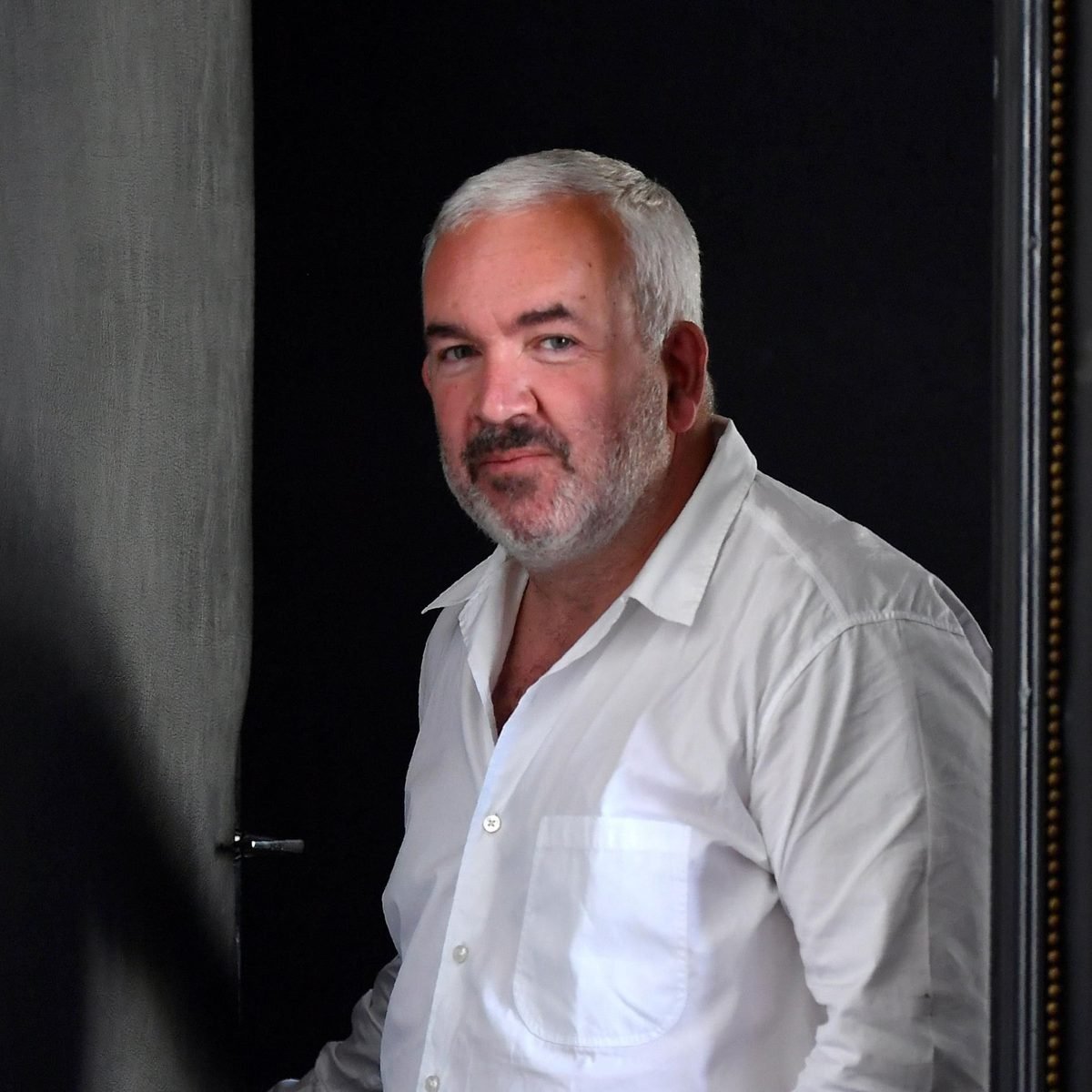
FROM THE BASSOON TO THE PODIUM: THE LIFE, CAREER, CURIOSITIES, AND ARTISTIC CONSECRATION OF MARC MINKOWSKI
Marc Minkowski, born in Paris in 1962, belongs to that extraordinary generation of conductors who transformed the modern understanding of Baroque and Classical music. Yet to define him simply as a “Baroque specialist” would be too narrow. Minkowski is one of the rare musicians who began in the world of historical performance and gradually expanded his territory until it included Handel, Rameau, Lully, Gluck, Mozart, Rossini, Offenbach, Bizet, Berlioz, Wagner, and the great symphonic tradition.
His career is the story of a musician who refused to accept that historical performance should mean dryness, museum-like restraint, or polite academic correctness. For Minkowski, old music is not old. It is dangerous, physical, theatrical, rhetorical, incisive, and alive. His performances often seem to remind us that Baroque music was never written for libraries: it was written for churches, courts, theatres, bodies, voices, dancers, actors, and listeners capable of being astonished.
THE PARISIAN BEGINNINGS: A MUSICIAN BORN INTO COLOUR AND MOVEMENT
Marc Minkowski was born in Paris into a world where culture, theatre, language, and musical curiosity were part of the atmosphere. His early instrumental training was not on the keyboard or violin, but on the bassoon. This detail is far more important than it may seem. The bassoon is an instrument of breath, wit, agility, colour, grotesque humour, melancholy, and theatrical character. It belongs naturally to the orchestra’s dramatic imagination.
A young bassoonist learns how music breathes from inside the ensemble. He learns how a phrase must be supported by air, how articulation gives speech to sound, how rhythm can be comic or tragic, how colour changes character, and how a single instrumental line can alter the mood of a whole scene. These lessons remained present in Minkowski’s later conducting.
There is something very “bassoon-like” in his musical personality: elastic, alert, colourful, witty, sometimes provocative, and always dramatic. Unlike conductors who seem to build performances only from architecture, Minkowski often builds them from pulse, gesture, breath, and theatrical instinct.
THE LESSONS OF CHARLES BRUCK: DISCIPLINE AND THE ART OF CONDUCTING
Minkowski turned to conducting at a very young age and studied with Charles Bruck, a conductor and teacher who played an important role in the formation of several notable musicians. Bruck’s influence mattered because he represented a serious, disciplined approach to the podium. Conducting was not treated as glamorous waving, but as an exacting art of listening, preparation, communication, and structural control.
For a young musician as instinctive as Minkowski, this discipline was essential. His later style could be fiery, theatrical, and physically energetic, but it was never simply chaotic. Under the apparent electricity there is a strong sense of articulation, texture, rhythmic spring, and dramatic control.
An important curiosity often associated with his early career is that one of the first works he conducted as a teenager was Berlioz’s Roman Carnival Overture. This is revealing. Long before he became known internationally as a Baroque conductor, his imagination was already attracted to brilliance, orchestral fantasy, theatrical colour, and French Romantic energy. Berlioz, in many ways, was already pointing toward the future Minkowski: a conductor of rhythm, blaze, and dramatic contrast.
THE MIRACLE OF AGE 19: LES MUSICIENS DU LOUVRE
In 1982, when he was still only 19, Marc Minkowski founded Les Musiciens du Louvre. This was the decisive act of his youth and remains the centre of his artistic identity. To found an ensemble at such an age was bold, almost reckless, but also prophetic. It showed that Minkowski did not want to wait for institutions to authorize his musical vision. He created his own instrument.
The name itself was beautiful and symbolic: Les Musiciens du Louvre. It suggested French elegance, historical memory, artistic heritage, and the dialogue between music and the visual arts. But the ensemble was never simply decorative. It became one of the most exciting period-instrument groups in Europe, dedicated first to Baroque music and later to a much wider repertory.
At the beginning, the ensemble was part of the broader historical-performance revolution that had transformed European musical life. Figures such as Nikolaus Harnoncourt, Gustav Leonhardt, Frans Brüggen, Trevor Pinnock, John Eliot Gardiner, William Christie, and others had already changed the rules. Minkowski entered this world not as a follower, but as a force with a recognizably French theatrical temperament.
BRUGES, 1984: THE FIRST PUBLIC SIGN OF AUTHORITY
In 1984, Minkowski won First Prize at the first International Early Music Competition in Bruges. This was an important early recognition. Bruges was one of the symbolic capitals of early music, and success there gave his young ensemble credibility within a movement that was becoming increasingly influential.
Yet Minkowski’s later career would show that he was never interested in early music as a closed world. He would eventually describe himself not as a narrow specialist, but almost as a rebel against specialization — a musician obsessed with styles, plural traditions, and the possibility of making different musical languages speak with equal urgency.
This is one of his defining traits. Minkowski’s career begins with Baroque instruments, but it does not end there. He uses historical awareness not as a cage, but as a springboard.
HANDEL: THE THEATRE OF PASSION
One of Minkowski’s greatest territories has always been Georg Frideric Handel. His Handel is not polite, ornamental, or merely elegant. It is dramatic, urgent, rhetorical, and full of human tension. He helped revive interest in operas and oratorios that had often been treated as specialist repertoire, including works such as Teseo, Amadigi, Riccardo Primo, Ariodante, Il trionfo del Tempo e del Disinganno, and Giulio Cesare.
For Minkowski, Handel is not simply a composer of noble arias. He is a dramatist of desire, power, grief, jealousy, grandeur, and moral struggle. The orchestra in Minkowski’s Handel never merely accompanies. It comments, attacks, seduces, breathes, and provokes. The continuo has theatrical nerve; the strings have bite; the winds have character; the singers are placed within a living dramatic machinery.
A revealing anecdote belongs to 1985, when Minkowski heard Nikolaus Harnoncourt conduct Handel’s Theodora in Paris. That experience reportedly marked him deeply, because it demonstrated that an orchestra could produce drama by itself, that instrumental rhetoric could speak with almost vocal force. This became one of Minkowski’s lifelong artistic convictions: an orchestra must not only play; it must speak.
THE FRENCH BAROQUE: LULLY, CHARPENTIER, RAMEAU
Minkowski’s importance for French music is enormous. With Les Musiciens du Louvre, he helped restore the theatrical and orchestral vitality of the French Baroque. His explorations of Lully, Charpentier, Marin Marais, Mouret, Mondonville, and especially Rameau brought new fire to a repertoire often misunderstood outside France.
In Rameau, Minkowski found one of his ideal composers. Rameau’s music is sensual, intellectual, surprising, harmonically adventurous, rhythmically alive, and theatrical in every bar. Minkowski’s performances of Hippolyte et Aricie, Anacréon, and other Rameau works helped listeners hear this music not as a historical curiosity, but as a blazing theatrical organism.
One of Minkowski’s most imaginative later projects was his creation of a kind of imaginary symphony from instrumental passages by Rameau. The idea was characteristic of him: instead of presenting Rameau only as opera, he revealed the orchestral genius hidden inside the theatre. He showed that Rameau’s instrumental music could stand beside the great symphonic imagination of later centuries.
GLUCK AND THE DRAMA OF REFORM
Minkowski also became a major interpreter of Christoph Willibald Gluck. This was a natural extension of his artistic personality. Gluck’s operatic reform sought directness, dramatic truth, and the stripping away of excessive ornament in favour of emotional clarity. Minkowski, with his theatrical temperament, responded powerfully to this world.
His work on Armide, Alceste, and Iphigénie en Tauride placed him within the great modern revival of Gluck. These works demand more than decorative beauty. They require tragic weight, dramatic continuity, and a sense that the orchestra participates in moral and emotional action.
Minkowski’s Gluck often seems to stand between worlds: Baroque rhetoric, Classical discipline, and Romantic intensity. This is one reason his conducting can be so compelling. He does not isolate styles; he lets them communicate.
THE ARCHIV PRODUKTION YEARS: THE RECORDED CONSECRATION
A major turning point came when Minkowski and Les Musiciens du Louvre signed an exclusive contract with Archiv Produktion, the historic early-music label of Deutsche Grammophon. This gave his work international visibility and placed him among the leading figures of the period-instrument movement.
His recordings of Rameau, Handel, Charpentier, Gluck, and others quickly gained critical attention. The Hippolyte et Aricie recording was especially significant, receiving major awards and helping establish Minkowski as a central modern interpreter of French Baroque opera. His Handel recordings likewise contributed to a broader revaluation of Handelian opera as living theatre rather than academic reconstruction.
These recordings mattered because they reached listeners far beyond the concert hall. For many collectors, Minkowski became one of the names associated with the discovery — or rediscovery — of an entire world of vocal and orchestral drama.
MOZART: FROM HISTORICAL STYLE TO DRAMATIC TRUTH
Minkowski’s expansion into Mozart was not a betrayal of his Baroque roots; it was their natural continuation. Mozart requires theatrical rhythm, speech-like phrasing, instrumental transparency, and emotional timing — all qualities cultivated by a conductor deeply immersed in earlier music.
His Mozart has often been notable for its alertness and dramatic bite. Works such as Idomeneo, Don Giovanni, Die Entführung aus dem Serail, Così fan tutte, and Le nozze di Figaro allowed him to bring together his love of theatre and his understanding of Classical style.
His Salzburg career was especially important. He became Artistic Director of the Mozartwoche in Salzburg from 2013 to 2017. This placed him at the heart of Mozart culture, not as a conservative guardian of tradition, but as a programmer and interpreter capable of refreshing the festival’s identity.
For Minkowski, Mozart is not porcelain. Mozart is theatre, ambiguity, erotic intelligence, social conflict, wit, tenderness, and sometimes cruelty. This is why his Mozart often feels alive in the muscles rather than merely beautiful on the surface.
ROSSINI, OFFENBACH, AND THE ART OF SPARKLING INTELLIGENCE
Another essential part of Minkowski’s identity is his affinity for composers of theatrical brilliance: Rossini and Offenbach. These composers require rhythmic precision, comic timing, speed, elegance, irony, and the ability to make the orchestra laugh without losing discipline.
Minkowski’s Offenbach is especially important. Offenbach is too often treated as light entertainment, but in the hands of a serious theatrical musician, he becomes a master of satire, speed, colour, and social intelligence. Minkowski understands that lightness is not superficiality. True lightness is difficult. It requires clarity, timing, brilliance, and a certain kind of mischief.
His work in Offenbach, including major projects such as Les Contes d’Hoffmann and other stage works, reflects his gift for theatrical atmosphere. He is not afraid of colour, speed, exaggeration, or sparkle. In this sense, Minkowski belongs to the lineage of conductors who understand that opera buffa, opéra-comique, and operetta can reveal truths as sharp as tragedy.
THE WAGNER AND BERLIOZ PARADOX
One of the most interesting curiosities of Minkowski’s career is his expansion into Wagner and Berlioz. At first glance, it might seem surprising that a conductor identified with Baroque and Classical repertoire would move toward Wagner. But historically informed musicians have often brought new clarity to Romantic music by rethinking articulation, transparency, tempo, and orchestral balance.
Minkowski’s Wagner is not the Wagner of overloaded late-Romantic heaviness. It tends to search for clarity, theatre, and motion. His performances of works such as Der fliegende Holländer reveal a conductor interested in Wagner before the full monumentality of the Ring — Wagner as drama, sea-storm, ballad, ghost story, and theatrical propulsion.
With Berlioz, the connection is even more natural. Berlioz’s music is orchestral theatre. It demands imagination, colour, narrative, and rhythmic electricity. Minkowski’s background in French repertoire and his instinct for dramatic sonority made Berlioz a natural extension of his world.
This expansion proved that Minkowski was not a conductor imprisoned by period labels. He became, in the best sense, a specialist of non-specialization.
FROM GRENOBLE TO THE WORLD
Les Musiciens du Louvre eventually moved from Paris to Grenoble, where the ensemble developed a strong institutional identity. The move was significant because it showed that Minkowski was not only a guest conductor travelling between prestigious venues; he was also an institution-builder.
Building an ensemble is different from conducting an established orchestra. It requires long-term vision, repertory planning, financial survival, artistic identity, public education, and the creation of a recognizable sound. Minkowski achieved this with Les Musiciens du Louvre. The ensemble became not only his instrument, but also one of the major European orchestras of historically informed performance.
This long partnership is one of the great achievements of his life. Many conductors are known by appointments; Minkowski is known by the orchestra he created.
THE RÉ MAJEUR FESTIVAL: A PERSONAL PROJECT
In 2011, Minkowski founded the Ré Majeur Festival on the Île de Ré, on the French Atlantic coast. This festival reveals another side of his personality: the desire to create musical life outside the standard metropolitan circuits. Festivals can become laboratories, meeting places, and intimate musical territories. They allow artists to shape atmosphere, not just programmes.
The name itself is charming: Ré Majeur, a pun on the island’s name and the musical key of D major. It suits Minkowski perfectly — elegant, musical, witty, French, and slightly playful. The festival shows his ability to combine seriousness with charm, artistic ambition with accessibility.
OPÉRA NATIONAL DE BORDEAUX: THE ADMINISTRATOR AND IMPRESARIO
From 2016 to 2021, Minkowski served as General Director of the Opéra National de Bordeaux. This was an important chapter because it placed him not only in front of an orchestra, but at the head of a major operatic institution.
Such a role demands different abilities: diplomacy, programming, administrative intelligence, institutional strategy, public responsibility, and a sense of how opera can survive in modern civic life. Minkowski’s Bordeaux period confirmed that he was not merely a conductor of performances, but an artistic leader capable of shaping institutions.
There is always risk when a performing musician becomes an administrator. The daily burdens of management can consume artistic energy. But Minkowski’s acceptance of such a position shows his wider vision: music is not only interpretation; it is also infrastructure, education, audience-building, programming, and cultural responsibility.
BOSTON BAROQUE: A NEW AMERICAN CHAPTER
In 2026, Marc Minkowski was announced as the new Music Director of Boston Baroque. This appointment is symbolically powerful. Boston Baroque is one of the important early-music institutions in the United States, and Minkowski brings to it decades of European experience, theatrical imagination, and a major international reputation.
For Minkowski, this new chapter also represents a return to one of the sources of his identity: Baroque music as living drama. But it is not a nostalgic return. After decades of conducting Mozart, Offenbach, Wagner, Berlioz, and Romantic repertoire, he returns to Baroque music with an even broader theatrical and orchestral imagination.
It is as if the circle has widened, not closed.
A CONDUCTOR OF THE PIT, THE STAGE, AND THE ORCHESTRA
Minkowski has conducted at many of the great opera houses and festivals, including Salzburg, Paris, Vienna, Milan, London, Brussels, Zürich, and other major centres. He has appeared with important orchestras including the Vienna Philharmonic, the Berlin Philharmonic, the Los Angeles Philharmonic, and other leading ensembles.
Yet his deepest identity remains theatrical. Even in the concert hall, he often seems to conduct as if the orchestra were on stage. He wants sound to move, speak, argue, dance, seduce, and surprise. His performances often possess a sense of forward propulsion, as if each phrase is an event with dramatic consequence.
This is why Minkowski is especially compelling in composers who require theatrical intelligence: Handel, Rameau, Gluck, Mozart, Rossini, Offenbach, Bizet, Berlioz, and Wagner. He is less interested in static beauty than in music as action.
ANECDOTES AND CURIOSITIES
One of the most remarkable facts about Minkowski’s life is that he founded Les Musiciens du Louvre when he was still a teenager. Few conductors have created their lifelong artistic instrument so early. Most young conductors wait to be invited; Minkowski built his own platform.
Another curiosity is his instrumental origin as a bassoonist. This gave him an unusual relationship with colour, breath, and orchestral character. His conducting often has the vitality of someone who knows the orchestra from within rather than from the outside.
A further anecdotal key is his encounter with Harnoncourt’s Handel. Hearing Theodora under Harnoncourt in Paris became a revelation of orchestral theatre: the realization that the instrumental body itself could generate drama. This experience helps explain why Minkowski’s Handel never sounds merely decorative.
He is also associated with the idea of being a “specialist of non-specialization.” This phrase captures his artistic paradox. He became famous through historically informed performance, but he has never accepted the prison of a single label. His world moves from Baroque opera to Romantic symphonic music, from Rameau to Wagner, from Handel to Offenbach.
Another charming curiosity is the name Ré Majeur, the festival he founded on the Île de Ré. The title is both geographical and musical, a pun that suggests Minkowski’s mixture of wit, elegance, and artistic seriousness.
Finally, his career shows one of the great transformations in modern musical life: the early-music conductor is no longer limited to early music. Minkowski helped prove that historical awareness could enrich later repertoire, and that period-instrument energy could change the way we hear Mozart, Rossini, Offenbach, Berlioz, and even Wagner.
HIS STYLE: INCISIVE, THEATRICAL, RHETORICAL, AND ALIVE
Minkowski’s conducting style is unmistakable. He favours clarity, rhythmic vitality, colour, contrast, theatrical impulse, and a sense of speech. His phrases do not merely flow; they pronounce. His rhythms do not merely proceed; they dance, strike, and provoke. His orchestral textures are rarely heavy for heaviness’s sake. Even in large works, he often searches for transparency and inner motion.
This does not mean that his performances are light in emotional weight. On the contrary, his best work combines energy with seriousness. In Handel, grief has dignity; in Rameau, dance has metaphysical elegance; in Gluck, tragedy has severe nobility; in Mozart, wit conceals pain; in Offenbach, laughter becomes critique; in Wagner, storm becomes theatre.
His art is based on the idea that music must speak before it can be admired.
WHY MARC MINKOWSKI MATTERS
Marc Minkowski matters because he helped redefine what historical performance could be. He showed that Baroque and Classical music need not be fragile, pale, or purely scholarly. It could be muscular, theatrical, sensual, witty, violent, comic, tragic, and modern in its immediacy.
He also matters because he refused to remain inside one repertory. His career demonstrates that the best historically informed musicians are not antiquarians. They are explorers. They study the past not to freeze it, but to release its energy.
From the bassoon to the podium, from teenage founder to international conductor, from Handelian opera to Salzburg Mozart, from Rameau to Wagner, from Grenoble to Bordeaux and Boston, Minkowski’s journey has been one of restless curiosity and theatrical intelligence.
He is a conductor who reminds us that music history is not a museum corridor. It is a stage. And on that stage, every rhythm, every aria, every overture, every dance, and every orchestral gesture must return to life.