22 January 2026
Johann Sebastian Bach by Herbert F. Peyser
On Classicapedia: Johann Sebastian Bach, Philipp Spitta, Johann Nicolaus Forkel
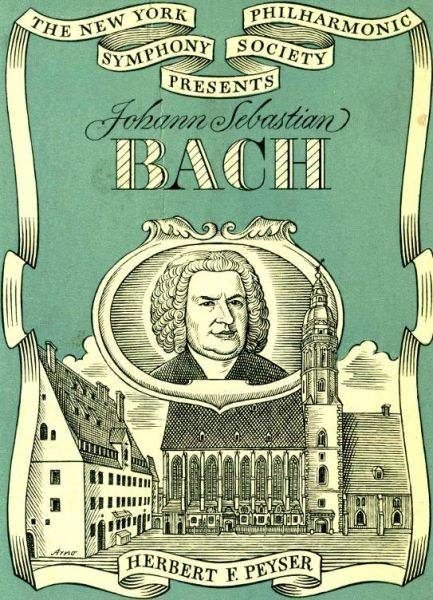
Free Download:
Johann Sebastian Bach by Herbert F. Peyser — what kind of Bach book this is, and how to use it
Johann Sebastian Bach by Herbert F. Peyser is a mid-20th-century narrative biography written for the cultivated general reader, not for specialists. It aims to explain Bach clearly and sympathetically, rather than to advance archival research.
Peyser was a music critic and cultural writer, closely linked to American musical journalism. His Bach is conceived as:
An accessible life story
* A guide through Bach’s major genres
A portrait that integrates religion, family, and work without technical overload
He writes about Johann Sebastian Bach as a working professional—disciplined, devout, and pragmatic—rather than as a remote or mythic genius.
✔️ Clarity and readability
✔️ Smooth chronological narrative (Eisenach → Weimar → Köthen → Leipzig)
✔️ Balanced tone, avoiding Romantic excess
✔️ Helpful for first encounters with Bach’s music and context
Peyser is particularly effective at:
Explaining why* Bach mattered historically
* Making large bodies of work intelligible to non-specialists
* Keeping biography and music in proportion
❌ No original source research
❌ Relies heavily on Philipp Spitta and early 20th-century German scholarship
❌ Simplifies institutional conflicts (especially Leipzig)
❌ Outdated on chronology and documentary nuance by modern standards
This is a synthesis, not an investigation.
Peyser sits between the 19th-century monuments and modern scholarship:
Forkel (1802) – foundational testimony
Spitta (1873–80) – monumental, documentary
Peyser (mid-20th c.) – readable synthesis for a broad audience
Modern scholars – Wolff, Dürr, Rifkin, etc. (archival and institutional depth)
Is it a good book?
Yes — for its purpose.
✔️ Excellent introductory biography
* ✔️ Humane, balanced, and engaging
* ❌ Not a research reference
* ❌ Superseded for scholarly work
Final verdict
Herbert F. Peyser’s Johann Sebastian Bach remains worth reading as a clear, cultured introduction and as a document of mid-20th-century Bach reception. It helps readers enter Bach’s world gracefully—but it should be complemented by modern scholarship for factual precision.