1 January 2026
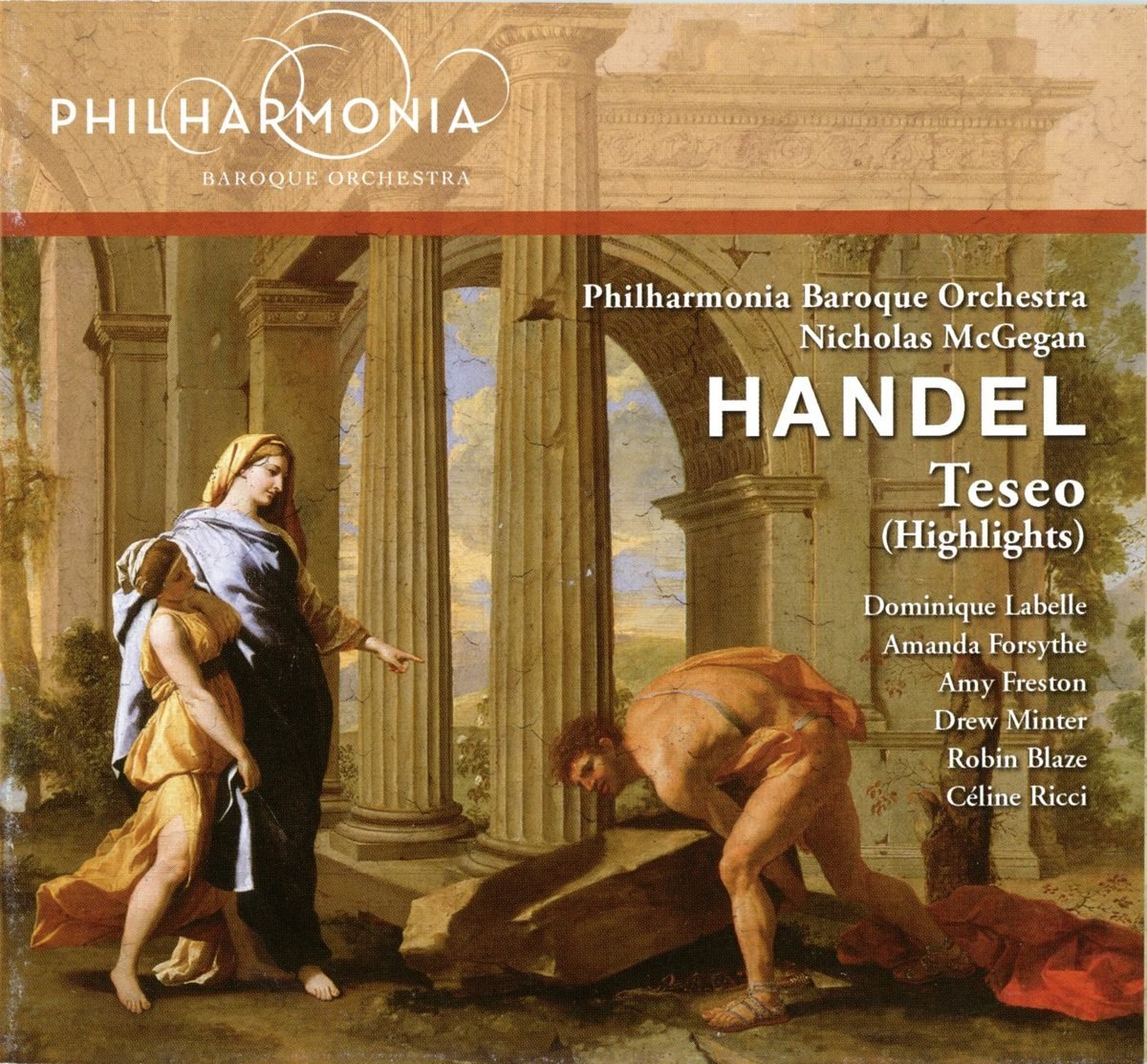
Handel - Teseo (highlights) - Nicholas McGegan
On Classicapedia: George Frideric Handel, Philippe Quinault, Jean-Baptiste Lully, Nicola Francesco Haym, Nicholas McGegan
1. Handel in London: A Composer in Ascendancy
Teseo belongs to the earliest and most decisive phase of Handel’s London career. Having arrived in England in 1710, Handel achieved spectacular success with Rinaldo (1711), the first Italian opera written specifically for the London stage. Its triumph established him instantly as the leading operatic composer in the city.
Rather than simply repeating that formula, Handel used Teseo—composed in 1712–1713—to explore new dramatic and structural possibilities, adapting Italian opera seria to English theatrical traditions and audience expectations.
At this moment, Handel was not yet the institutional figure he would later become; he was an innovator testing the limits of operatic form, learning how to integrate Italian vocal style with English dramatic pacing.
2. The Libretto: From Quinault to London
The libretto of Teseo is based on Philippe Quinault’s French tragédie lyrique *Thésée* (1675), originally set by Jean-Baptiste Lully. Handel’s text was adapted into Italian—probably by Nicola Francesco Haym, his long-time collaborator—though the exact authorship remains debated.
This French origin is crucial. Unlike most Italian opera seria librettos of the period, Teseo retains:
A five-act structure (unique among Handel’s operas),
A strong emphasis on choral and ensemble scenes,
And a prominent role for spectacle, magic, and theatrical machinery.
Thus, Teseo stands at a crossroads between:
* French court opera,
* Italian opera seria,
* And English theatrical tradition.
3. Composition and Premiere: 1712–1713
Handel composed Teseo during 1712, completing the score late that year or very early in 1713.
The opera premiered on 10 January 1713 at the Queen’s Theatre, Haymarket, London.
It enjoyed an exceptionally long run for the time—around 13 performances—making it one of Handel’s most successful early operas, surpassed only by Rinaldo.
4. Subject and Dramatic Focus
The plot draws on Greek mythology, centering on Theseus, hero of Athens, and the sorceress Medea.
The dramatic core is not heroic action but emotional conflict:
* Medea’s obsessive love,
* Her jealousy and thirst for revenge,
* And the tension between passion and political order.
In contrast to later Handelian heroes, Teseo himself is remarkably passive. The opera’s true protagonist is Medea—a role that dominates the drama both psychologically and musically.
5. Medea: One of Handel’s First Great Tragic Portraits
Medea in Teseo anticipates Handel’s later tragic heroines (Agrippina, Rodelinda, Alcina).
Her music charts a terrifying emotional trajectory:
* From wounded pride,
* To jealousy,
* To rage and magical vengeance.
Handel gives her:
* Highly expressive recitatives,
* Fiercely dramatic arias,
And some of the most harmonically daring writing of his early period.
In Medea, Handel demonstrates—already in 1713—his exceptional ability to musicalize psychological extremity.
6. Structural Uniqueness: The Five-Act Opera
Teseo is the only five-act opera Handel ever composed.
This structure, inherited from French tragédie lyrique, allows:
* Gradual accumulation of tension,
* Greater narrative breadth,
* And more opportunities for choruses and instrumental interludes.
However, it also posed challenges for Italian-style audiences accustomed to three acts. Handel responded by:
* Shortening arias,
* Increasing the number of accompanied recitatives,
* And maintaining a relatively brisk dramatic pace.
7. Musical Style and Orchestration
Musically, Teseo reveals a composer in rapid stylistic evolution.
Key characteristics include:
A more varied orchestral palette than in Rinaldo*,
Frequent use of dance rhythms inherited from French opera,
* And choruses that play an active dramatic role.
Handel uses the orchestra to depict:
* Magic and enchantment,
* Emotional instability,
* And the shifting balance between order and chaos.
8. Reception and Immediate Legacy
The success of Teseo confirmed Handel’s position as London’s foremost operatic composer.
It demonstrated that:
* He could adapt foreign models creatively,
* He could satisfy English theatrical taste,
* And he could sustain large-scale dramatic structures beyond Italian convention.
After Teseo, Handel’s operatic language became increasingly confident, leading directly to works such as Amadigi di Gaula (1715) and Giulio Cesare (1724).
9. Long-Term Reputation and Revival
Despite its early success, Teseo gradually disappeared from the repertory in the 18th and 19th centuries.
Its revival in the 20th century, especially within the historically informed performance movement, has revealed it as:
* One of Handel’s most theatrically imaginative early operas,
* A crucial experiment in operatic form,
* And a work that foreshadows his later mastery of psychological drama.
Modern productions often emphasize:
* Medea’s centrality,
* The opera’s French-influenced pacing,
* And its striking use of magic and spectacle.
10. Place Within Handel’s Operatic Output
Teseo occupies a unique position:
Earlier than Giulio Cesare*,
More structurally ambitious than Rinaldo*,
* More French-influenced than any other Handel opera.
It is the opera in which Handel first demonstrates that he could reshape operatic tradition, not merely inherit it.
Conclusion
Teseo is one of Handel’s most fascinating early operas. Composed in 1712–1713, it stands at the intersection of myth, magic, and theatrical innovation.
Through its unique five-act structure, its powerful portrait of Medea, and its synthesis of French, Italian, and English elements, Teseo reveals a young Handel already thinking beyond convention, experimenting boldly with form and psychology.
It is not merely an early success—it is a foundational work that helped define what Handelian opera could become.