30 December 2025
Handel - Rodelinda - Nicholas McGegan
On Classicapedia: Nicola Francesco Haym, Nicholas McGegan
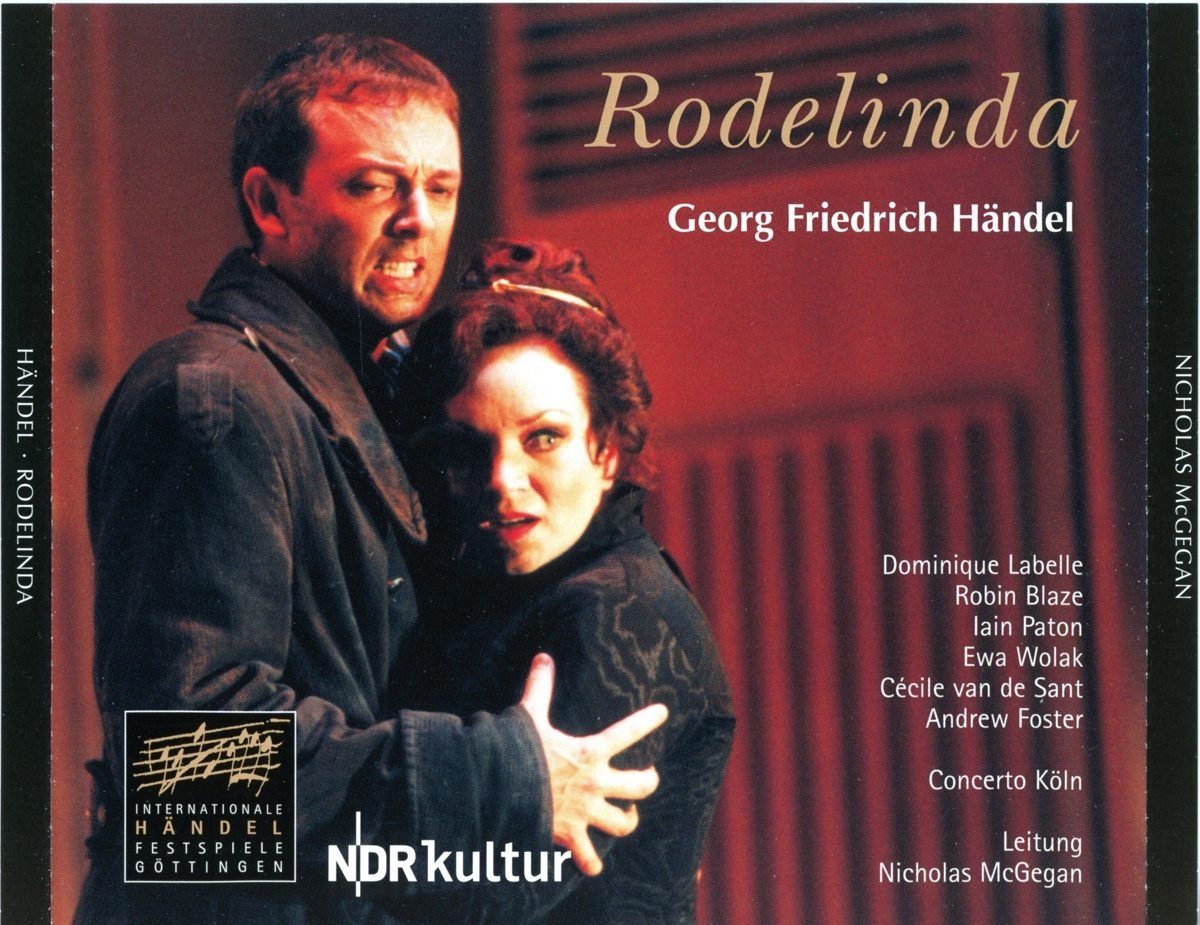
Power, Fidelity, and Moral Resistance in Handel’s Most Intimate Tragedy
Rodelinda (premiered in London, 1725) stands among the most psychologically profound and emotionally concentrated of Handel’s operas. Unlike the spectacular magic of Rinaldo or the political grandeur of Giulio Cesare, Rodelinda unfolds as a chamber drama of conscience, loyalty, and inner strength, where emotional truth outweighs outward action.
It is one of Handel’s supreme achievements in portraying marital love under extreme political pressure—a rare subject in opera, and one treated here with extraordinary dignity.
The libretto, adapted by Nicola Francesco Haym from earlier sources, is set in 7th-century Lombardy, a world of usurpation, exile, and fragile legitimacy. Yet the historical setting is merely a frame: the real drama lies in private emotions tested by public power.
Handel composed Rodelinda at the height of his London operatic mastery, writing for singers capable not only of virtuosity but of intense inward expression.
At the heart of the opera stands Rodelinda, one of Handel’s greatest female characters.
She is not a warrior or sorceress, but a woman whose power lies in absolute moral clarity. Widowed in name, she refuses to remarry the usurper Grimoaldo, even when threatened with the death of her child.
Her resistance is not hysterical or theatrical—it is quiet, relentless, and unbreakable.
Act I – Loss and Usurpation
King Bertarido has been overthrown and is believed dead. The throne is seized by Grimoaldo, who seeks legitimacy by marrying Rodelinda.
Rodelinda rejects him outright. Her defiance is dangerous but unwavering.
Unbeknownst to all, Bertarido is alive, living in exile and mourning not only his kingdom but the apparent loss of his wife.
Act II – Disguise and Moral Trial
Bertarido secretly returns, disguised, and witnesses his wife’s apparent submission to Grimoaldo. The moment is devastating.
But Rodelinda’s actions conceal a deeper strategy: she agrees to marriage only on the impossible condition that Grimoaldo kill her son with his own hand—forcing him to confront the horror of his ambition.
This act is one of the most powerful moral confrontations in Baroque opera.
Act III – Revelation and Restoration
Truth slowly emerges. Grimoaldo, incapable of murder, collapses under the weight of guilt and relinquishes power.
Bertarido is restored to the throne, not through force, but through moral endurance and emotional integrity.
Rodelinda and Bertarido are reunited—not triumphantly, but with quiet gravity.
Rodelinda is remarkable for its restraint:
* Long, lyrical arias that dwell on inner conflict
* Minimal reliance on spectacle
* Extraordinary use of silence, harmonic tension, and vocal line
Among the most celebrated arias are:
“Ritorna, o caro” (Bertarido): grief turned inward
“Dove sei, amato bene” (Rodelinda): restrained despair
“Vivi, tiranno!” (Rodelinda): controlled fury of moral defiance
Here, Handel writes music that listens to the characters, rather than overpowering them.
It centers on marriage, not seduction or conquest
Its heroine triumphs through ethical steadfastness, not magic
* Violence is threatened but never indulged
* Emotional truth replaces spectacle
In many ways, Rodelinda anticipates later operatic realism: the drama arises from choices, not events.
Today, Rodelinda is widely regarded as:
one of Handel’s most human operas,
a masterpiece of psychological characterization,
* and a cornerstone of modern Handel revival.
Its power lies not in grand gestures, but in quiet resistance and unyielding love.