7 June 2026
Giuseppe De Luca — The Aristocrat of the Italian Baritone
On Classicapedia: Giuseppe De Luca, Titta Ruffo, Ettore Bastianini, Giacomo Puccini, Enrico Caruso
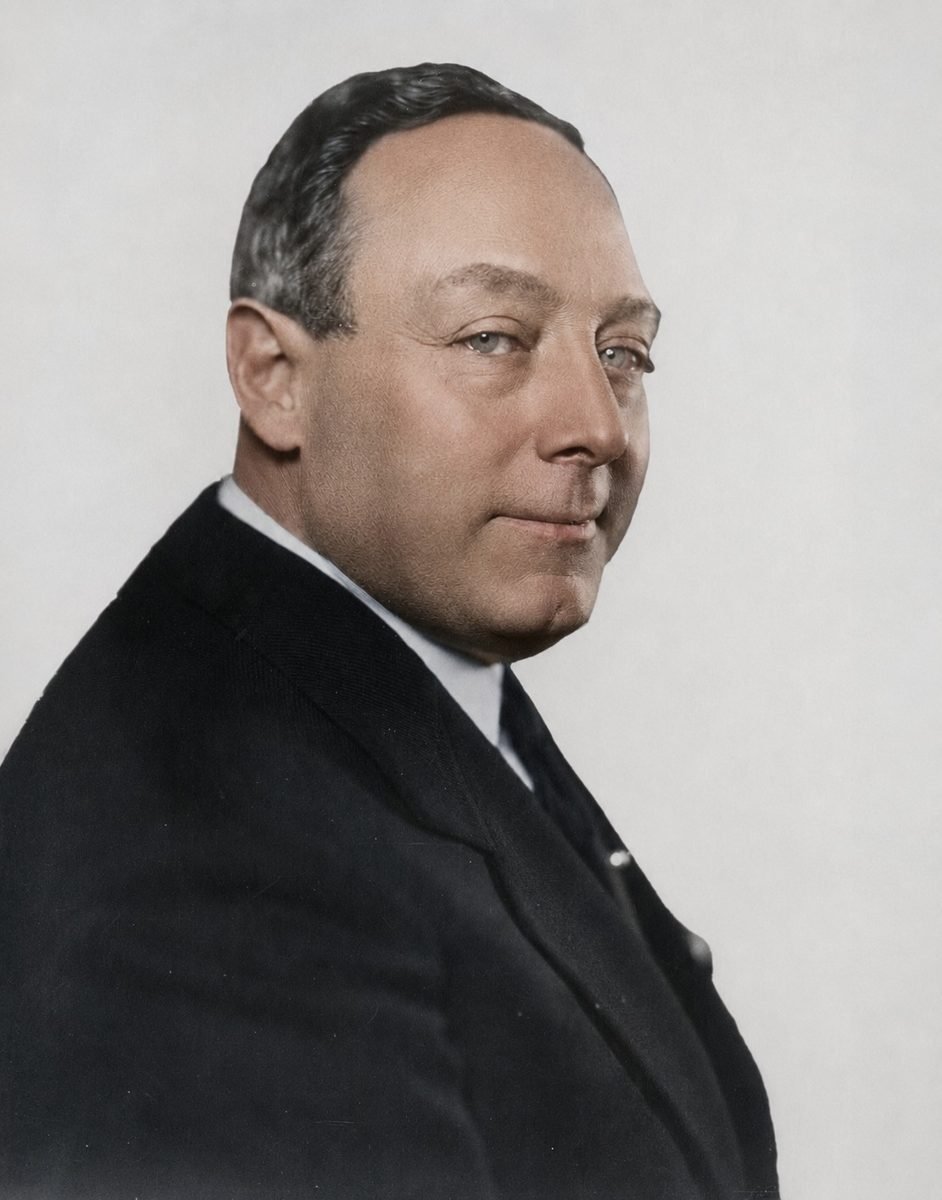
Giuseppe De Luca — The Aristocrat Of The Italian Baritone Voice
Giuseppe De Luca was one of the most refined Italian baritones of the twentieth century, admired not for overwhelming vocal force but for elegance, diction, musical intelligence, legato, and unique stylistic finesse. He was born in Rome on 25 December 1876 and died in New York on 26 August 1950. His career extended from the late nineteenth century into the middle of the twentieth, and he achieved his greatest international triumphs at the Metropolitan Opera, where he became one of the most admired baritones in the company’s history.
De Luca occupies a very special place among Italian baritones. He was not a baritone of volcanic power like Titta Ruffo, nor a bronze-voiced Verdian monument like Ettore Bastianini. His art belonged to another tradition: a more aristocratic, conversational, and psychological form of singing. His greatness lay in the way he could make every word alive, every phrase shaped, every musical line full of dramatic meaning without exaggeration.
He is also historically important because he created two famous Puccini roles: Sharpless in Madama Butterfly at La Scala, Milan, in 1904, and the title role in Gianni Schicchi at the Metropolitan Opera in 1918. Few baritones can claim to have stood at the birth of two such contrasting Puccinian characters: one humane, restrained, and diplomatic; the other comic, cunning, quick-witted, and theatrical.
Early Life And The Formation Of A Roman Artist
Giuseppe De Luca was born in Rome on Christmas Day, 1876, a detail often remembered because it gives his biography a symbolic and almost theatrical beginning. Rome was not merely his birthplace; it helped shape his artistic identity. He grew up in an environment where Italian language, theatre, gesture, and vocal tradition were naturally present. His musical formation was serious and disciplined, and from the beginning he showed not only vocal promise but a remarkable instinct for verbal clarity and dramatic characterization.
He studied in Rome and entered the operatic profession at a time when Italian opera was undergoing major change. The older bel canto tradition had not disappeared; Verdi still dominated the repertoire; verismo was rising; Puccini was becoming the great theatrical force of the new century; and international opera houses were beginning to create a global star system. De Luca’s career developed at the meeting point of all these worlds.
His early success came because he possessed qualities that were immediately useful on stage: a well-schooled voice, clear Italian diction, elegant phrasing, and a natural theatrical instinct. He did not need to overwhelm an audience. He could persuade it. That persuasive quality became one of the secrets of his longevity.
The Voice — Finesse, Diction, And The Art Of Subtlety
De Luca’s voice was not the largest baritone instrument of his generation, but it was one of the most beautifully used. Its special qualities were clarity, poise, legato, and exquisite vocal control. He had a firm baritone centre, a flexible upper register, and an extraordinary capacity to make text and music seem inseparable.
Where other baritones impressed through sheer sound, De Luca impressed through proportion. He knew how to colour a phrase, how to lighten the tone for irony, how to darken it for authority, how to make a line conversational without losing musical shape. His singing reminds us that the Italian baritone tradition was not only about power. It was also about bel canto discipline, linguistic elegance, and dramatic taste.
This made him especially effective in roles requiring intelligence rather than brute force: Figaro, Don Pasquale’s Malatesta, Gianni Schicchi, Sharpless, Marcello, Lescaut, and many Mozart and bel canto characters. Yet he was also capable of singing Verdi successfully, especially roles where refinement, phrasing, and verbal authority mattered more than sheer dramatic weight.
The Metropolitan Opera — His Great International Home
De Luca achieved his greatest triumphs at the Metropolitan Opera in New York. There he became one of the company’s most valued Italian baritones, admired both by audiences and by colleagues. The Met offered him the ideal platform: a large international stage, a varied repertory, and the possibility of appearing with the greatest singers of the age.
His Metropolitan years placed him beside some of the legendary names of twentieth-century opera. He sang in an era marked by Enrico Caruso, Giovanni Martinelli, Beniamino Gigli, Amelita Galli-Curci, Frieda Hempel, Rosa Ponselle, Lucrezia Bori, Ezio Pinza, and many others. In such company, a singer could not survive by routine. De Luca survived because he brought something unmistakable: class, style, dramatic wit, and absolute musical taste.
The Met also became the place where he created one of his most famous roles: Gianni Schicchi in Puccini’s one-act comic masterpiece. That premiere, in 1918, gave De Luca a role perfectly suited to his gifts: rapid verbal delivery, comic timing, elegance, intelligence, and the ability to dominate a stage without vocal exaggeration.
De Luca And Puccini — Two Historic Creations
One of the most important aspects of De Luca’s career is his connection with Giacomo Puccini. He created two roles in Puccini operas, and they could hardly be more different.
The first was Sharpless in Madama Butterfly, first performed at La Scala, Milan, on 17 February 1904. The premiere was famously unsuccessful, one of the most dramatic failures in Puccini’s career. Yet the opera was later revised and became one of the most beloved works in the repertoire. De Luca therefore participated in a historic first night whose immediate result was disappointing, but whose long-term significance proved enormous.
Sharpless requires humanity, restraint, moral awareness, and dignified declamation. He is not the romantic hero, nor the villain. He is the observer who understands the tragedy too late and cannot prevent it. De Luca’s subtle intelligence must have suited the part exceptionally well.
The second Puccini creation was Gianni Schicchi, first performed at the Metropolitan Opera on 14 December 1918, as part of Il trittico. Here De Luca’s gifts were used in a completely different way. Schicchi is cunning, theatrical, affectionate, calculating, comic, and socially sharp. The role requires not only vocal skill but rhythmic precision, comic pacing, and dramatic intelligence. It is easy to understand why Puccini and the Met entrusted it to him.
Sharpless — The Voice Of Conscience In Madama Butterfly
Sharpless is one of Puccini’s most understated baritone roles. He does not have the theatrical flamboyance of Scarpia, the comic brilliance of Schicchi, or the romantic warmth of Marcello. His importance is moral rather than spectacular. He sees what Pinkerton does not wish to see: the human consequences of a careless emotional adventure.
De Luca’s creation of Sharpless is significant because the role demands exactly the type of artistry for which he was admired. Sharpless must sing with civility, empathy, dignity, and a quiet sense of tragedy. The part is not built for applause in the obvious sense; it is built for dramatic balance. De Luca’s elegant restraint would have given the role its proper weight.
There is something deeply Puccinian in this: a secondary character who carries the ethical burden of the story. Sharpless is the man who understands, but cannot save. De Luca’s ability to communicate through nuance made him an ideal first interpreter.
Gianni Schicchi — The Comic Masterpiece And De Luca’s Triumph
If Sharpless shows De Luca’s moral refinement, Gianni Schicchi shows his theatrical brilliance. The title role is one of the great comic baritone parts of the twentieth century. Schicchi must be charming and unscrupulous, affectionate and manipulative, quick-thinking and theatrically irresistible.
Puccini’s writing for Schicchi is rhythmically alive, verbally fast, and dramatically exact. The singer must not merely sing notes; he must control the entire stage situation. De Luca’s art was perfectly suited to this. His diction, timing, and intelligence allowed him to make the character vivid without vulgarity.
The premiere of Gianni Schicchi at the Met in 1918 was one of De Luca’s historic moments. He gave the world the first version of a character who would become one of Puccini’s most beloved comic creations. It is worth remembering that Schicchi’s famous world includes not only the soprano aria O mio babbino caro, but also a brilliantly structured ensemble comedy in which the baritone title role is the dramatic engine.
His Most Popular Roles
De Luca’s repertoire was broad and reveals the variety of his gifts. He was especially successful in roles that required elegance, comic timing, diction, lyric line, and characterization.
Figaro in Rossini’s Il barbiere di Siviglia was one of his natural roles. It required verbal agility, rhythmic sparkle, charm, and theatrical command. De Luca’s Figaro was not merely a loud comic barber; he was a clever man of the theatre, quick, stylish, and musically precise.
Doctor Malatesta in Donizetti’s Don Pasquale suited his wit and conversational elegance. The role depends on timing and lightness, qualities that De Luca possessed in abundance.
Gianni Schicchi in Puccini’s Gianni Schicchi became one of his signature achievements because it combined comic intelligence with vocal authority.
Sharpless in Puccini’s Madama Butterfly showed his ability to create a humane, dignified, morally serious character without theatrical exaggeration.
Marcello in Puccini’s La bohème gave him a warmer, more youthful dramatic profile, combining friendship, jealousy, humour, and lyrical feeling.
Lescaut in Puccini’s Manon Lescaut allowed him to bring elegance and worldly charm to a role that can easily become superficial.
Valentin in Gounod’s Faust and other French roles showed his command of style beyond the Italian repertory.
In Verdi, he was associated with roles such as Giorgio Germont in La traviata, Rigoletto, Renato in Un ballo in maschera, and Amonasro in Aida, though his Verdian art was generally more refined and less monumental than that of heavier dramatic baritones.
De Luca And The Great Singers Of His Time
De Luca’s career brought him into contact with some of the most famous singers of the early twentieth century. His association with the Metropolitan Opera meant that he shared the stage with Enrico Caruso, Giovanni Martinelli, Beniamino Gigli, Rosa Ponselle, Amelita Galli-Curci, Lucrezia Bori, Ezio Pinza, and many others.
What made him distinctive among such spectacular colleagues was his refusal to compete by sheer volume. De Luca was not a singer who needed to dominate through force. He dominated through intelligence and style. In ensembles, he could be perfectly present without over-singing. In comic scenes, he could be brilliant without distortion. In lyrical scenes, he could suggest emotion without sentimentality.
This made him an ideal colleague for great singers. He was vocally and theatrically alert, capable of shaping a scene from within rather than merely projecting himself outward.
Curiosities And Anecdotes
One of the most interesting curiosities about De Luca is that he created two Puccini roles that could not be more different. Sharpless is a restrained man of conscience; Gianni Schicchi is a comic manipulator and master of social improvisation. That De Luca was trusted with both shows the extraordinary versatility of his art.
Another striking point is that he participated in the disastrous first night of Madama Butterfly in 1904. Today it is difficult to imagine Butterfly as anything other than a central Puccini masterpiece, but its premiere at La Scala was a failure. De Luca therefore witnessed one of those theatrical moments in which the audience’s immediate judgment was completely overturned by history.
His creation of Gianni Schicchi in 1918 is another remarkable detail. Puccini’s comedy requires extraordinary precision, and De Luca’s style was perfectly suited to it. The role’s success helped confirm that Puccini, usually associated with tragedy and lyrical pathos, could also write a masterpiece of comic theatre.
A further curiosity is De Luca’s longevity. He sang for many decades and retained the admiration of audiences because his technique was based on control rather than force. Singers who depend mainly on volume often decline rapidly; singers like De Luca, who understand balance and proportion, can last much longer.
He was also one of the great recorded baritones of the early twentieth century. His recordings reveal a type of singing that is now rare: clean, clever, word-conscious, and elegant. They are invaluable not because they show an enormous voice, but because they show how much can be done with phrasing, diction, timing, and taste.
Finally, De Luca’s career reminds us that a baritone can be great without being massive. In the public imagination, great baritones are often associated with Verdi’s thunderous fathers and tyrants. De Luca represents another ideal: greatness through intelligence, subtlety, and style.
Recordings — The Survival Of An Elegant Art
De Luca’s recordings are among the most important documents of Italian baritone singing from the first half of the twentieth century. They preserve the qualities that made him famous: clarity of text, ease of phrasing, poise, grace, and perfect control of character.
His records of Rossini and Donizetti show his comic elegance and agility. His Puccini recordings reveal his natural theatrical sense. His Verdi recordings show a baritone who approached the composer with refinement rather than excess. For listeners accustomed only to larger, more dramatic baritone voices, De Luca can be revelatory: he shows that Italian opera is not only about emotional intensity, but also about speech, proportion, charm, and musical civilization.
His recorded legacy is especially valuable because it captures a singer trained in the nineteenth-century Italian tradition but active in the modern recording age. Like Martinelli among tenors, De Luca stands as a bridge between older theatrical practice and the preserved history of recorded opera.
De Luca In The History Of Baritone Singing
In the history of baritone singing, Giuseppe De Luca represents the ideal of elegant mastery. He was not primarily a singer of overwhelming dramatic impact, although he could be dramatically effective. His importance lies in the fact that he embodied a complete theatrical musician: singer, actor, stylist, and verbal artist.
He belongs to the same broad historical constellation as Titta Ruffo, Mattia Battistini, Pasquale Amato, Antonio Scotti, and later Tito Gobbi. But his place is distinct. Ruffo represented volcanic baritone power; Battistini represented bel canto aristocracy; Gobbi represented theatrical psychological modernity. De Luca stands between these worlds as a singer of supreme musical and verbal finesse.
His influence is most strongly felt in the idea that the baritone can be the most intelligent voice on stage. In comic roles, he could guide the action. In lyrical roles, he could clarify the emotional atmosphere. In serious roles, he could suggest moral authority without brutality.
Legacy
Giuseppe De Luca’s legacy rests on several pillars. First, he was one of the great Italian baritones of the Metropolitan Opera. Second, he created two important Puccini roles, Sharpless and Gianni Schicchi. Third, his recordings preserve one of the finest examples of early twentieth-century Italian baritone style.
He reminds us that vocal greatness is not always measured by volume. It can also be measured by how a singer speaks through music, how he shapes a phrase, how he understands a character, and how he gives meaning to words.
For opera lovers, De Luca remains one of the supreme examples of the cultivated Italian baritone: stylish, lucid, theatrical, and deeply musical.