27 February 2026
Erich Wolfgang Korngold: The Child Prodigy Who Conquered Vienna And Reinvented Hollywood — A Chronological Narrative (1897–1957)
On Classicapedia: Erich Wolfgang Korngold, Gustav Mahler, Alexander Zemlinsky, Max Reinhardt
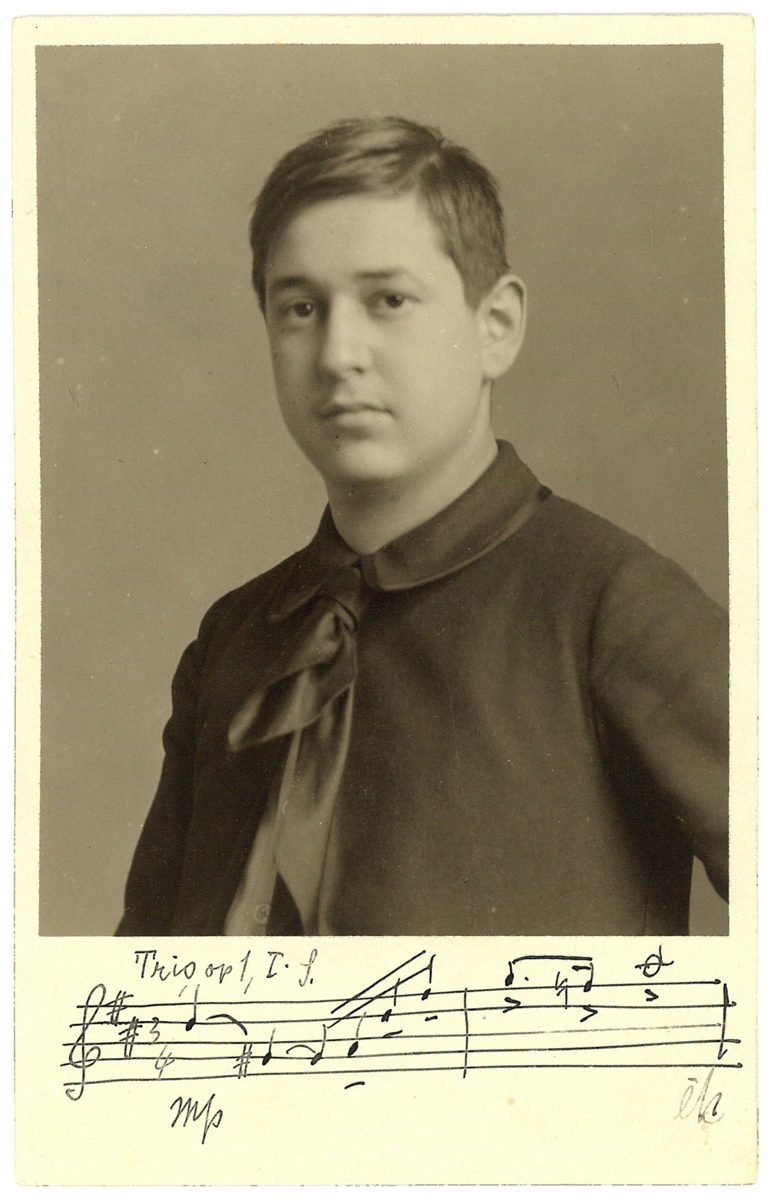
I. A VIENNESE MIRACLE CHILD (1897–1908)
Erich Wolfgang Korngold was born on Bold Unicode: 29 May 1897 in Brünn, Moravia (today Brno, Czech Republic), into one of the most intellectually charged musical households of fin-de-siècle Vienna. His father, the formidable critic Julius Korngold, was among the most influential voices in the Austro-German musical press — brilliant, feared, and deeply protective of his son’s talent.
From the earliest years, the boy’s gifts were unmistakable. By the age of five, he was improvising at the piano; by seven, he was composing works that astonished professional musicians. When Gustav Mahler heard the child play in 1906, he reportedly declared him “a musical genius” and recommended formal training with Alexander von Zemlinsky.
This early endorsement placed Korngold immediately within the highest Viennese musical orbit.
II. THE PRODIGY TRIUMPHS (1908–1916)
Under Zemlinsky’s guidance, Korngold developed at a pace that stunned Vienna. Unlike many prodigies whose early brilliance fades, his technical command matured with remarkable speed.
Key early successes included:
Piano Trio in D major, Op. 1 (1909)
Der Schneemann (The Snowman, ballet, 1910) — performed at the Vienna Court Opera when the composer was only 13
Growing reputation as the most extraordinary young composer in the Habsburg world
Anecdote — the rehearsal that shocked Vienna
At rehearsals for Der Schneemann, seasoned orchestral players reportedly expressed disbelief that such assured orchestration could come from a teenager. The episode quickly entered Viennese musical folklore and cemented Korngold’s reputation as the most precocious composer since Mozart.
III. OPERATIC STARDOM (1916–1920)
Korngold’s true breakthrough came with opera. In 1916, at just 19, he completed:
Der Ring des Polykrates
Violanta
Both were premiered in 1916 under the patronage of Bruno Walter, who immediately recognized the young composer’s theatrical instinct.
But the decisive triumph arrived with:
Die tote Stadt (The Dead City)
Completed 1919
Premiered simultaneously in Hamburg and Cologne on Bold Unicode: 4 December 1920
Conductors included Otto Klemperer
The opera became an international sensation almost overnight.
Essential qualities:
Lush late-Romantic harmony
Cinematic orchestral color
Psychological intensity
Memorable lyricism (“Marietta’s Lied”)
By his early twenties, Korngold was one of the most performed opera composers in the German-speaking world.
IV. VIENNA MATURITY AND THE SHADOW OF MODERNISM (1920s)
The 1920s brought both success and growing aesthetic tension. Musical fashion was shifting toward Stravinsky, Schoenberg, and the New Objectivity movement. Korngold, however, remained committed to an opulent late-Romantic idiom rooted in Mahler and Richard Strauss.
He continued to compose operas, including:
Das Wunder der Heliane (1927)
Die Kathrin (completed 1937)
Though admired, these works faced increasingly divided critical reception. Some critics — including, at times, his own father’s rivals — began to view his style as luxurious but stylistically conservative.
V. HOLLYWOOD EXILE AND A NEW MUSICAL LANGUAGE (1934–1945)
A decisive transformation occurred in 1934, when the theatrical director Max Reinhardt invited Korngold to Hollywood to arrange Mendelssohn’s music for the film A Midsummer Night’s Dream.
What began as a temporary assignment became permanent exile after the Anschluss (1938) made return to Austria impossible for the Jewish composer.
The Hollywood revolution
In America, Korngold reinvented himself as one of the founding masters of symphonic film music.
Major scores included:
Captain Blood (1935)
The Adventures of Robin Hood (1938) — Academy Award
The Sea Hawk (1940)
Kings Row (1942)
Essential historical truth: Korngold helped define the lush symphonic sound of the Golden Age of Hollywood.
Anecdote — the “opera composer in disguise”
Studio musicians recalled that Korngold treated film scoring exactly like opera, insisting on full orchestral rehearsals and dramatic continuity. He famously remarked that he was “writing operas without singing.”
This mentality profoundly shaped later film composers, including John Williams.
VI. RETURN TO ABSOLUTE MUSIC (1945–1957)
After World War II, Korngold sought to re-establish himself as a “serious” concert composer. Among his finest late works:
Violin Concerto in D major, Op. 35 (1945) — premiered by Jascha Heifetz
Symphony in F-sharp major, Op. 40 (1952)
Cello Concerto (1946)
Despite their quality, the postwar European avant-garde climate proved inhospitable to his lush idiom. Recognition came slowly.
Korngold died in Hollywood on Bold Unicode: 29 November 1957.
VII. PERSONAL PORTRAIT
Those who knew Korngold consistently described:
Extraordinary natural fluency
Meticulous craftsmanship
Deep filial loyalty to his father
Gentle but somewhat sheltered temperament
His life was unusually shaped by Julius Korngold’s powerful presence, which both protected and, at times, isolated the young genius from harsher professional realities.
VIII. CONCLUSION — THE BRIDGE BETWEEN OPERA AND CINEMA
Across six decades, Erich Wolfgang Korngold lived several musical lives:
Prodigy of imperial Vienna
Operatic sensation of the 1920s
Architect of Hollywood symphonic film music
Late Romantic traditionalist in a modernist age
Essential historical judgment:
Korngold did not abandon the late-Romantic tradition — he transplanted it, first to the opera stage and then to the cinema screen, where its influence still resounds today.