7 March 2026
Clemens Krauss: From Viennese Chorister to Opera Maestro (1893–1929)
On Classicapedia: Clemens Krauss, Richard Strauss, Arthur Nikisch, Richard Heuberger
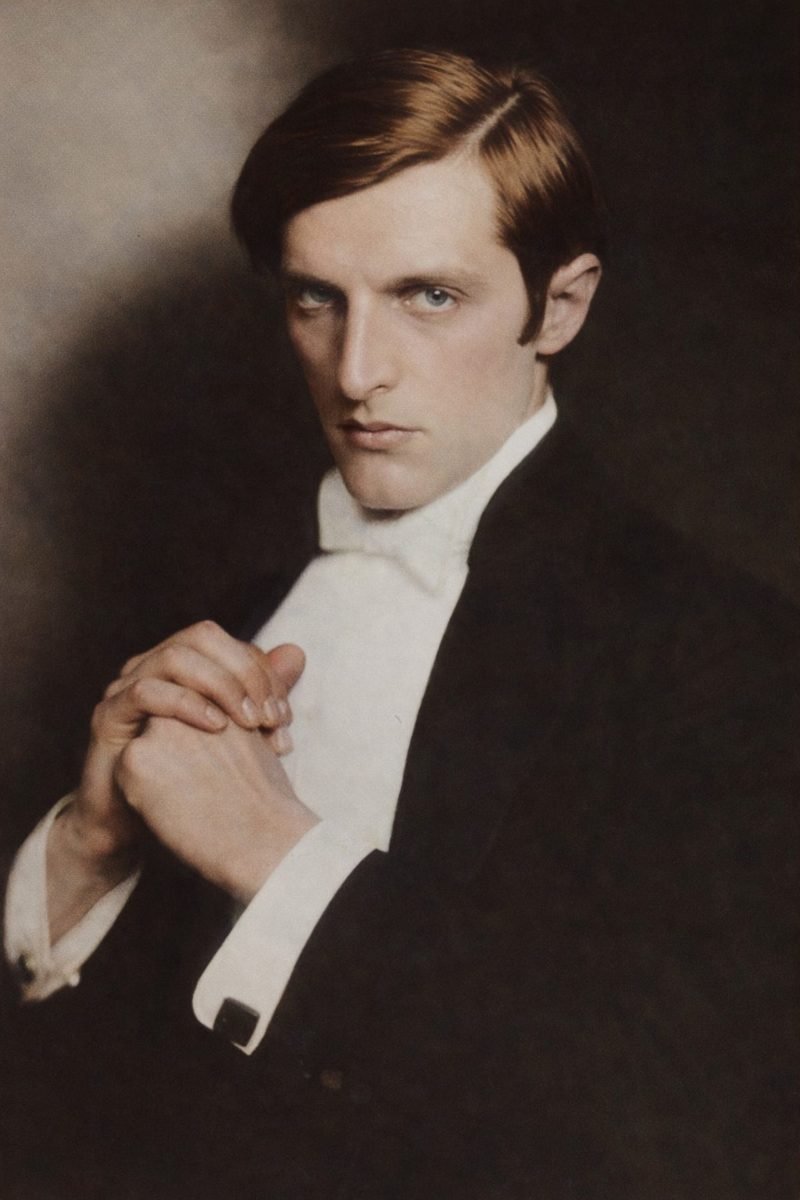
I. BORN INTO VIENNESE THEATRE — A CHILD OF THE OPERA WORLD
Clemens Heinrich Krauss was born in Vienna on 31 March 1893, and from the beginning his life was marked by the world of the theatre rather than by bourgeois domestic normality. He was the son of Clementine Krauss, who had begun as a dancer in the Vienna court theatre world and later became a celebrated actress and operetta singer. In other words, Krauss did not have to discover the stage from outside: he was born almost inside it. Even his wider family circle connected him to the glamorous and unstable social universe of late imperial Vienna.
That origin mattered profoundly. Many conductors of the old Austro-German tradition came up through chapel music, provincial opera, or conservatory rigor; Krauss grew up in a city where music, theatre, social prestige, and scandal were inseparable. This helps explain one of the lasting paradoxes of his personality: he would become a musician of exceptional professional control, yet he always retained something instinctively theatrical, almost aristocratic, in the way he moved through musical life. He was never merely a kapellmeister in the dry administrative sense. Even when very young, he belonged to the stage as to a natural habitat.
II. THE VIENNA CHOIR BOY — A VOICE BEFORE A BATON
As a boy, Krauss sang in the Imperial Court Chapel, the world-famous institution associated with the Vienna Choir Boys. Contemporary accounts emphasize the beauty of his soprano voice, and this is more than a charming anecdote: it reveals that his earliest serious discipline was not instrumental but vocal. He learned music first as breath, line, diction, and liturgical phrasing—all qualities that later made him such a commanding opera conductor.
The boy who sang in the Hofkapelle was already being trained, whether consciously or not, in the Viennese understanding of musical style: elegance without rigidity, line without heaviness, theatre without vulgarity. It is striking how many later witnesses to Krauss’s conducting would stress his instinctive command of singers. That gift did not appear magically in adulthood. It had roots in this early immersion in vocal culture, where the body itself becomes the first instrument of musical expression.
III. CONSERVATORY YEARS — A PROFESSIONAL IN THE MAKING
Krauss studied at the Vienna Conservatory, completing his training in 1912. There he studied composition with Hermann Graedener and theory with Richard Heuberger, both figures anchored in the rigorous Central European professional tradition. This training gave him exactly what later conductors needed but audiences rarely noticed: fluency in score reading, structural intelligence, stylistic control, and the ability to think like a complete theatre musician rather than a mere charismatic frontman.
One must insist on this point because Krauss’s later public image can obscure it. He would become associated with glamour, Strauss, Salzburg, major premieres, and social brilliance, but underneath all that stood a severely trained Viennese musician. His success was not based on superficial charm. It rested on deep preparation. In that respect he belonged to the older Central European lineage in which the conductor’s authority had to be earned through competence before it could be adorned by prestige.
IV. BRNO — THE FIRST REAL THEATRE SCHOOL
Immediately after his studies, Krauss entered professional life in the most traditional and demanding way possible: through practical theatre work. He became chorus master in Brunn (Brno) from 1912 to 1913, and there he made his conducting debut in 1913. This was the real beginning. Not Vienna’s prestige, not family connections, not future celebrity, but the hard daily apprenticeship of an opera house where one must manage rehearsals, singers, chorus, orchestra, schedules, and crises.
This phase is essential to understanding Krauss. He did not emerge as a symphonic wunderkind in the concert hall; he was shaped in the theatre. The young conductor learned how to build a performance from below, from the mechanics of stage life upward. Colleagues in such settings often remembered him as quick, alert, disciplined, and unusually sure of himself for his age. That confidence was not empty bravado. It came from a real sense of operatic pulse. Even at the beginning, he seems to have understood that music in the theatre must never become abstract; it must move, breathe, and speak.
V. RIGA, NUREMBERG, AND STETTIN — THE LONG ASCENT
After Brunn, Krauss followed the classic kapellmeister route through a sequence of increasingly important posts: Riga (1913–1914), Nuremberg (1915), and then Stettin (1916–1921). This trajectory may seem provincial beside the glitter of his later life, but in truth it was the making of him. Such cities formed the real workshop of German-speaking musical professionalism. There a conductor had to be versatile, fast-learning, and resilient. He had to know repertory broadly, work efficiently, and impose authority without wasting time.
An especially revealing detail from these years is that his Stettin appointment allowed him to travel to Berlin and hear Arthur Nikisch conduct the Berlin Philharmonic. That was not a trivial experience. Nikisch represented one of the great models of modern conducting: elegance, atmosphere, line, and hypnotic control. It is difficult to prove literal influence in a narrow sense, but it is easy to see why Krauss, himself a man of theatre and sonority, would have absorbed something from witnessing such authority. The young Krauss was learning not only from his own work, but from the examples of the reigning masters.
VI. THE FIRST MAJOR TURN — GRAZ AND THE RETURN TO AUSTRIA
After the war, Krauss returned to Austria and became director of the opera and symphony concerts in Graz. This was the point at which he ceased to be merely a promising young professional and began to look like a figure of real consequence. Graz was not Vienna, but it was no longer apprenticeship territory. Here Krauss could shape musical life more fully, and his abilities as both organizer and conductor became much more visible.
What made him stand out was not only technical competence but a blend of theatrical instinct and cultivated taste. He could handle repertory, manage institutions, and project a style that felt unmistakably Viennese yet modern. This combination was immensely attractive in the unstable postwar years, when opera houses needed both authority and renewal. It is here that we begin to see the mature Krauss emerging: not simply a good conductor, but a man who could run an operatic world.
VII. RICHARD STRAUSS NOTICES HIM — THE DECISIVE ARTISTIC ALLIANCE
The decisive breakthrough came when Richard Strauss took notice of him. Strauss invited Krauss in 1922 to join the conducting staff of the Vienna State Opera at short notice. This was a turning point of the highest importance. Strauss was not only a giant composer but also one of the central authorities in German opera. For such a figure to recognize Krauss meant that the younger man had already proven himself at a very high level.
This relationship would become one of the defining artistic alliances of Krauss’s life. But already at this early stage it tells us much: Strauss perceived in him exactly what the best composers and institutions sought in a conductor—reliability, intelligence, theatrical command, and the capacity to realize difficult modern scores without chaos. Krauss was not merely advancing; he was being admitted into the inner circle of major operatic power.
VIII. VIENNA, FRANKFURT, AND THE PATH TO CONSECRATION
The years after 1922 brought a rapid enlargement of Krauss’s profile. He worked with the Vienna State Opera, taught conducting in Vienna, led the Vienna Tonkunstler concerts from 1923 to 1927, and then served as Intendant of the opera in Frankfurt and director of the Museum concerts there from 1924 to 1929. These were not isolated engagements but signs that he had become one of the most trusted and visible conductors of the German-speaking world.
His Salzburg Festival debut in 1926 further confirmed the ascent. Salzburg was already becoming one of the symbolic centers of high musical culture in Austria, and to appear there meant entering a select international field. By the end of the decade he also guest-conducted in the United States, another sign that his name was now circulating beyond the Central European system that had formed him.
The final step in this first great phase came in 1929, when he was appointed director of the Vienna State Opera. That appointment marks the true consagracion the user asks about. The boy from the Viennese theatre milieu, the choirboy, the conservatory student, the provincial Kapellmeister, the operatic climber, had now reached one of the supreme posts in European music. In 1930, the Vienna Philharmonic also appointed him its music director, sealing his status at the center of Austrian musical life.
IX. THE EARLY KRAUSS AS A PERSON — CHARM, DISCIPLINE, AND A NATURAL FEEL FOR POWER
What kind of man had emerged by the end of the 1920s? Not yet the politically controversial, historically burdened figure of the 1930s and 1940s, but already unmistakably the real Krauss: elegant, commanding, socially gifted, and musically exact. He united two worlds that are not easily reconciled: the practical discipline of the kapellmeister and the cultivated brilliance of the cosmopolitan theatre man.
That combination explains why he rose so quickly. He was not only efficient; he was persuasive. He could lead institutions because he understood how prestige works in opera. He could attract composers because he knew how modern works needed to be protected and organized. And he could hold orchestras because, beneath the sophistication, there was genuine technique. His consecration was therefore not accidental. It was the logical outcome of a rare mixture of background, training, instinct, and ambition.
CONCLUSION — BEFORE THE MYTH, THE FORMATION
The early life of Clemens Krauss is one of the most revealing examples of how a great operatic conductor is made. There was no sudden miracle. There was Vienna, voice, theatre, conservatory rigor, provincial apprenticeship, practical experience, contact with masters, and finally recognition by Strauss and the highest institutions. By 1929, Krauss had completed the ascent from gifted insider to fully established conductor of major European importance.
Essential final insight: Krauss was formed not by one single breakthrough, but by the perfect fusion of Viennese theatrical instinct and Central European professional discipline. It was this fusion that made him, before all later controversies, one of the most naturally operatic conductors of his generation.