1 July 2026
André-Ernest-Modeste Grétry: The Master of Comic Opera Who Gave Heart to French Theatre
On Classicapedia: André-Ernest-Modeste Grétry, Christoph Willibald, Ritter von Gluck, Joseph Haydn, Luigi Cherubini, Wolfgang Amadeus Mozart
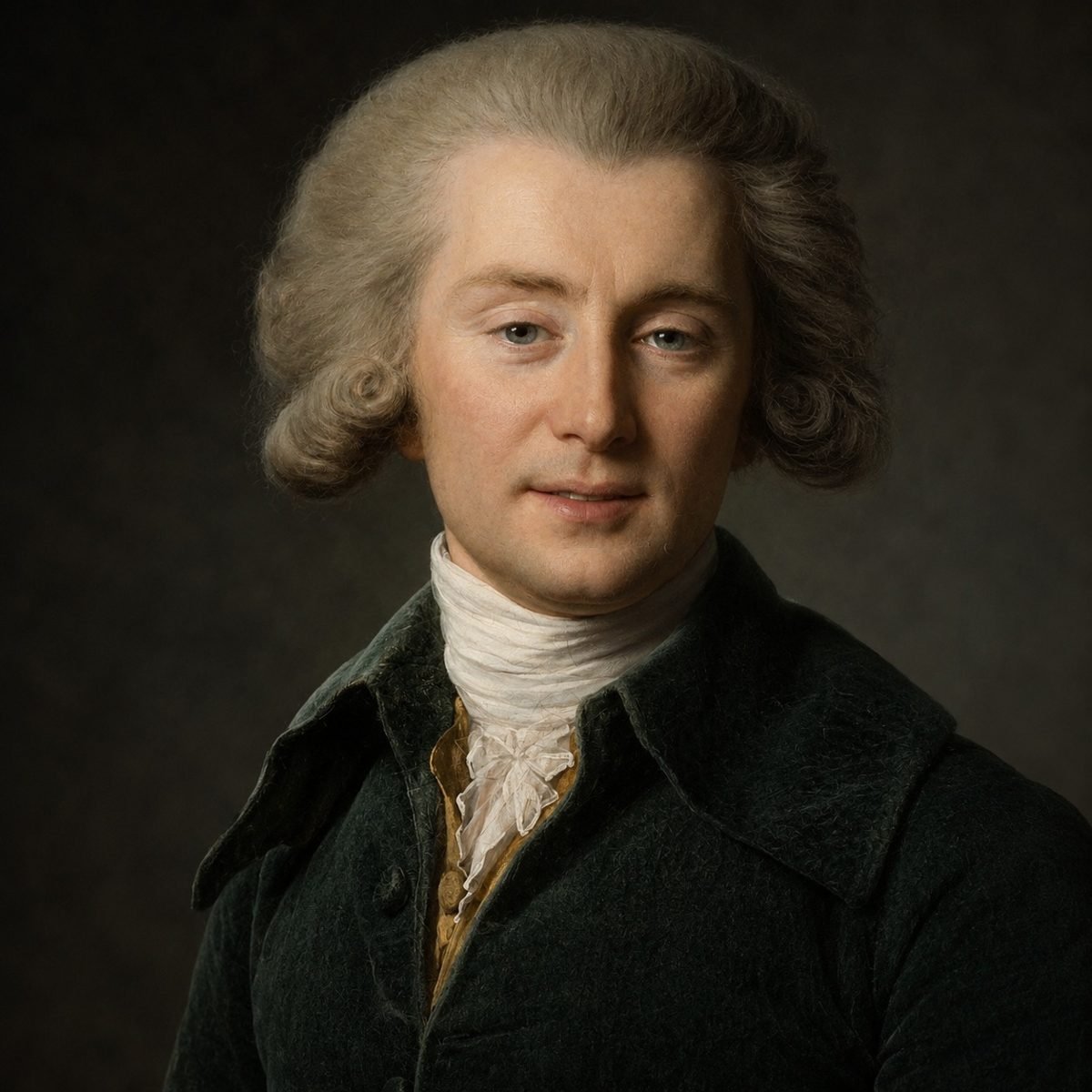
André-Ernest-Modeste Grétry
Born: 8 February 1741, Liège — now Belgium
Died: 24 September 1813, Montmorency, France
Among the composers who shaped French musical theatre in the second half of the eighteenth century, André-Ernest-Modeste Grétry occupies a position of exceptional charm and importance. He was one of the great masters of opéra comique, the French theatrical genre that combined spoken dialogue with musical numbers and often joined wit, sentiment, social observation and emotional immediacy.
Grétry was not a symphonic revolutionary like Haydn, not a tragic reformer like Gluck, not a severe dramatic architect like Cherubini. His genius lay in another direction: melodic naturalness, theatrical instinct, human warmth and direct emotional communication.
His music speaks with clarity. It does not overwhelm; it touches. It does not usually seek grandeur; it seeks character, feeling and theatrical truth. In this sense, Grétry gave French musical theatre something essential: a heart.
LIÈGE: A CHILD OF THE FRANCO-BELGIAN WORLD
Grétry was born in Liège on 8 February 1741. The city, now in Belgium, belonged to a rich cultural region connected with French, Walloon, Flemish and broader European traditions. Like Gossec, Grétry came from the borderland between French culture and the musical vitality of the Low Countries.
His father was a violinist, and music entered his life early. Grétry sang as a choirboy and received a practical musical education rooted in church and theatre. His early years were not luxurious, but they gave him a strong foundation in melody, voice and performance.
The young Grétry showed talent, but his artistic destiny required a wider world. Like many ambitious musicians of the eighteenth century, he looked toward Italy — the great school of melody, opera and vocal expression.
ITALY: THE SCHOOL OF MELODY
Grétry travelled to Italy, where he absorbed the world of Italian opera. This experience was decisive. Italy taught him the importance of the singing line, the dramatic value of melody and the natural relationship between music and voice.
He studied in Rome and encountered Italian theatrical culture at close range. This did not make him an Italian composer in the full sense, but it gave him something French music greatly needed: a fluent, natural, expressive melodic gift.
Grétry would later bring this melodic ease into French opéra comique. His Italian training softened and animated the French theatrical tradition. He learned to write melodies that could be remembered, sung, loved and immediately understood.
This was one of his greatest strengths. Grétry’s music often seems to speak directly, without rhetorical heaviness. It has the simplicity of song and the precision of theatre.
PARIS: THE STAGE OF HIS TRIUMPH
Grétry eventually settled in Paris, where his career truly flowered. Paris was a city of intense theatrical life, public debate, literary culture and musical competition. It had audiences who loved wit, sentiment, social satire and emotional immediacy.
This was the ideal environment for Grétry.
French opéra comique had grown out of popular theatre, fairground entertainment and spoken dialogue with songs. By Grétry’s time, it had become a sophisticated genre capable of comedy, tenderness, moral sentiment and even serious feeling.
Grétry became one of its supreme masters. He understood how to write music that served character and situation. He could make an aria feel like a natural extension of speech. He could create scenes in which melody, dialogue and theatrical timing worked together.
His success in Paris was immense. He became one of the most beloved composers of his age.
OPÉRA COMIQUE: THE THEATRE OF WIT, SENTIMENT AND HUMAN TRUTH
Grétry’s name is inseparable from opéra comique. Despite the word “comique,” the genre was not always merely comic. It could include sentiment, danger, moral testing and emotional seriousness. Its defining feature was usually the combination of spoken dialogue with musical numbers.
This form suited Grétry perfectly. He had a natural feeling for theatre. He knew how long a melody should be, when a character should sing, when speech should return, and how to avoid musical heaviness.
His music rarely interrupts the drama. It clarifies it.
In Grétry’s hands, opéra comique became a theatre of human recognizability: lovers, servants, fathers, daughters, mistaken identities, moral choices, tender confessions and social misunderstandings. His world is closer to everyday emotion than to mythological grandeur.
That is why his best works feel so immediate. He made French opera speak in a human voice.
LE HURON: THE EARLY PARISIAN SUCCESS
One of Grétry’s early Parisian successes was Le Huron, first performed in 1768. Based on material connected with Voltaire’s literary world, the opera revealed Grétry’s ability to combine wit, theatrical pacing and melodic charm.
The work helped establish him in Paris and showed that he could write music perfectly suited to French taste. It was elegant, clear, amusing and theatrically effective.
This early success mattered because Parisian audiences could be demanding. They valued literary intelligence as much as musical grace. Grétry offered both.
With Le Huron, he began to show that he was not merely an imported composer from Liège with Italian training. He was becoming a genuine French theatrical master.
ZÉMIRE ET AZOR: BEAUTY, MAGIC AND MELODIC ENCHANTMENT
One of Grétry’s most famous and beloved works is Zémire et Azor, first performed in 1771. The story is related to the Beauty and the Beast tradition, and it allowed Grétry to explore fantasy, tenderness and emotional transformation.
This opera shows Grétry at his most enchanting. The music is graceful, lyrical and theatrically responsive. He creates a world of magic without losing human directness.
The appeal of Zémire et Azor lies in its emotional clarity. The supernatural story becomes a vehicle for feeling: fear, compassion, love and recognition.
Grétry was not trying to dazzle with orchestral spectacle. He was trying to make the listener believe in the emotions of the characters. That was his genius.
RICHARD CŒUR-DE-LION: THE OPERA THAT MADE A MELODY INTO A SYMBOL
Grétry’s most historically famous opera is probably Richard Cœur-de-Lion, first performed in 1784. It tells a story of loyalty, captivity and recognition centred on the legendary King Richard the Lionheart.
The opera became especially famous for the romance Ô Richard, ô mon roi, a melody that later acquired political associations during the French Revolution and the royalist imagination.
This is a fascinating example of how theatrical music can escape the stage and become a public symbol. Grétry wrote a melody of simple emotional power, and history gave it a wider resonance.
Richard Cœur-de-Lion also reveals one of Grétry’s dramatic strengths: he understood the expressive power of recognition. A song, a voice, a remembered melody can carry identity, loyalty and emotion.
This idea would become important in later opera, where recurring melodies and memory-motifs acquired dramatic significance.
GRÉTRY AND THE EMOTIONAL POWER OF SIMPLICITY
The secret of Grétry’s art lies in simplicity — but not poverty.
His melodies are often direct, but they are precisely placed. His harmonies are clear, but they support character. His orchestration is generally modest, but it allows the voice and drama to remain central.
This simplicity was not accidental. Grétry believed in intelligibility. He wanted the audience to understand the feeling immediately. He did not cover the theatre with musical complexity. He illuminated it.
In this sense, he belongs to the Enlightenment. His music trusts natural feeling, clarity of expression and human communication.
The emotional directness of his works made them accessible to a wide public. His operas could move cultivated listeners without requiring learned musical analysis.
THE PHILOSOPHY OF THEATRICAL TRUTH
Grétry thought deeply about music and theatre. He was not only a practical composer; he was also a reflective artist who wrote about musical expression.
His ideas centred on the relationship between music, language and dramatic truth. For him, melody had to follow the emotional state of the character. Music had to arise naturally from situation. The composer’s task was not to display cleverness, but to make feeling audible.
This makes Grétry important not only as a composer but as part of the eighteenth-century debate about opera. The question of the age was: should opera exist to show vocal virtuosity, to create spectacle, or to express drama?
Grétry’s answer was clear: opera must speak to the heart through character and theatrical truth.
GRÉTRY AND THE FRENCH REVOLUTION
Grétry’s career passed through the enormous rupture of the French Revolution. Unlike Gossec and Méhul, whose revolutionary public music became central to civic ceremony, Grétry is remembered above all for his theatrical works from before and during the revolutionary period.
The Revolution transformed the meaning of some of his music. Melodies from earlier operas could acquire political significance. Audiences heard them differently depending on the changing climate of power, loyalty, suspicion and public emotion.
Grétry survived the upheaval and remained respected. His music had enough human warmth and theatrical flexibility to outlive political change. He was admired under different regimes because his art was not confined to one ideology.
Yet his world did change. The delicate sentimental theatre of the pre-Revolutionary period gave way increasingly to larger public drama, rescue opera, heroic subjects and later Romantic intensity. Grétry belonged to an earlier emotional language, but one that remained beloved.
THE FAVOURITE OF AUDIENCES
Grétry was one of the most popular composers of his time. His works were performed frequently, admired widely and loved by audiences. This popularity was not based on empty fashion. It was based on his ability to understand theatrical emotion.
Audiences recognized themselves in his music. His characters did not seem remote. His melodies were memorable. His dramatic situations were clear. His sentimental moments were sincere.
In an age that valued sensibility — the culture of tears, tenderness, virtue and natural feeling — Grétry was perfectly placed. He knew how to make feeling graceful.
This explains why he became so important in French opéra comique. He gave the genre a refined emotional vocabulary.
GRÉTRY AND MOZART: A DIFFERENT KIND OF THEATRICAL GENIUS
Grétry and Mozart were very different theatrical composers, but the comparison is revealing.
Mozart’s operatic genius lies in psychological depth, ensemble complexity, dramatic simultaneity and the ability to make music reveal contradictory states of mind at once.
Grétry’s genius is more direct. He simplifies, clarifies and humanizes. He does not create the multilayered emotional universe of Le nozze di Figaro or Don Giovanni, but he excels at immediate emotional recognition.
His world is smaller, but not insignificant. He represents the French art of theatrical clarity, just as Mozart represents the universal art of musical psychology.
Both understood character. They simply approached it differently.
GRÉTRY AND THE LATER FRENCH OPERA TRADITION
Grétry’s influence extended into later French opera. His emphasis on melody, spoken dialogue, character and emotional directness helped shape the development of opéra comique after him.
The later French tradition — from Boieldieu and Auber to Adam, Hérold, Bizet and even elements of Offenbach — inherited a world in which melody, clarity and theatre had to work together. Grétry was one of the founding figures of that tradition.
He helped make opéra comique a serious artistic form without destroying its accessibility. That balance between refinement and public appeal became one of the great strengths of French musical theatre.
ANECDOTES AND CURIOSITIES
One of the most famous curiosities about Grétry concerns his heart. After his death, his heart was preserved separately and eventually became an object of symbolic veneration in Liège. This extraordinary detail reflects the affection with which he was remembered in his birthplace.
Another fascinating point is the political afterlife of the romance Ô Richard, ô mon roi from Richard Cœur-de-Lion. A melody written for the theatre became associated with royalist feeling during the Revolution.
Grétry was also deeply admired by French audiences for his ability to write melodies that seemed natural and inevitable. His music was easy to remember, but not vulgar.
He wrote memoirs and reflections on music, giving us insight into his ideas about drama, melody and expression.
Another curiosity is that he was one of the composers whose fame was immense in his own time but declined later when the operatic canon shifted toward Mozart, Rossini, Verdi, Wagner and the grand Romantic repertory. Yet his importance in French theatrical history remains undeniable.
MAJOR WORKS
Le Huron 1768
An early Parisian success that established Grétry as a major voice in French opéra comique.
Lucile 1769
A tender and influential work showing his gift for sentimental expression and domestic feeling.
Zémire et Azor 1771
One of his most enchanting operas, based on the Beauty and the Beast tradition.
L’Amant jaloux 1778
A brilliant example of his theatrical skill, comic pacing and melodic fluency.
Richard Cœur-de-Lion 1784
His most historically famous opera, containing the celebrated romance Ô Richard, ô mon roi.
Raoul Barbe-Bleue 1789
A theatrical work connected with the Bluebeard legend, showing his gift for dramatic colour and story.
Guillaume Tell 1791
A work on a patriotic subject that later became central to European opera through other composers.
Mémoires ou Essais sur la musique
His reflections on music and theatre, important for understanding his artistic ideals.
MUSICAL STYLE: MELODIC CHARM, THEATRICAL TRUTH AND EMOTIONAL DIRECTNESS
Grétry’s style is marked by natural melody, clear dramatic pacing, emotional simplicity and human warmth.
His melodies are memorable and direct.
His vocal writing follows the character’s feeling.
His orchestration is generally clear and supportive.
His dramatic instinct is practical and precise.
His music values intelligibility over complexity.
His emotional world is tender, sentimental and humane.
He does not seek the sublime in the manner of Beethoven or the tragic severity of Cherubini. His art is closer to conversation, confession, tenderness and theatrical immediacy.
Grétry’s music smiles, sighs, remembers and recognizes.
GRÉTRY AND THE CLASSICAL ERA
Grétry’s place in the Classical era is essential because he represents one of its most important French theatrical faces.
The Classical period was not only symphonies, quartets and sonatas. It was also theatre: spoken dialogue, song, sentiment, comedy, social observation and emotional truth.
Grétry gave French opéra comique a voice of remarkable naturalness. He helped make melody the servant of character. He showed that theatrical music could be simple without being shallow, charming without being trivial, touching without being excessive.
His contribution is therefore different from that of Haydn, Mozart or Beethoven, but it is historically indispensable.
He belongs to the world of Enlightenment theatre, sensibility and French dramatic clarity.
FINAL YEARS AND DEATH
Grétry spent his later years as a respected elder figure of French music. He had lived through the final decades of the old monarchy, the Revolution, the rise of Napoleon and the transformation of French musical life.
He died in Montmorency on 24 September 1813.
By then, the world of opéra comique had changed, and the new century was moving toward larger Romantic gestures. But Grétry’s music remained a symbol of melodic grace and theatrical feeling.
His memory was especially cherished in Liège and in France, where he was regarded as one of the great creators of national comic opera.
LEGACY
The legacy of André-Ernest-Modeste Grétry lies in his mastery of opéra comique. He gave the genre elegance, feeling, melodic charm and dramatic truth. His works helped define French theatrical music before the nineteenth-century rise of grand opera and Romantic drama.
He was a composer of human scale. His greatness does not depend on monumentality, but on immediacy. He knew how to make a melody express a character’s heart. He knew how to make theatre breathe naturally through music.
Grétry was the poet of French opéra comique.
The composer of melodic charm and theatrical sincerity.
And one of the great musical voices of eighteenth-century French theatre.