23 November 2025
A Complete Timeline Of Works For The Feast Of Saint Cecilia
On Classicapedia: Giovanni Pierluigi da Palestrina, Orlande de Lassus, Marc-Antoine Charpentier, Giovanni Paolo Colonna
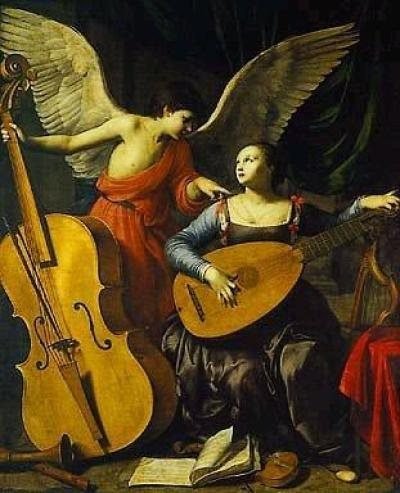
c. 1560 – Palestrina: *Cantantibus Organis*
Polyphonic motet celebrating the legend of Cecilia singing inwardly to God.
Late 1500s – Orlando di Lasso: *Sancta Caecilia*
Motet composed for liturgical use on her feast.
1600 (approx.) – Jacob Handl (Gallus): *Cantantibus Organis*
Renaissance motet widely used in Central Europe on St. Cecilia’s Day.
1619–1670 – Various Italian Liturgical Works
By Cavalli, Carissimi, and Roman composers (many unnamed) for the 22 November feast.
1677 – Marc-Antoine Charpentier: *Caecilia, Virgo et Martyr* (H.397)
Large French Baroque motet for her day.
1683 – First documented “Feast of St. Cecilia” celebrations in London
This created commissions for odes and ceremonial works by many English composers.
1683 – Giovanni Paolo Colonna: *Missa pro Sancta Caecilia*
A mass written for Bologna’s Cecilian celebrations.
1683 – John Blow: *Ode for St. Cecilia’s Day*
One of the earliest English odes written for the guild of musicians.
1684 – Henry Purcell: *Welcome to All the Pleasures*
Purcell’s first St. Cecilia Day ode.
1692 – Purcell: *Hail! Bright Cecilia*
The most famous Cecilian ode of the Baroque era.
1708 – Alessandro Scarlatti: *Cecilia, vergine e martire*
An important Roman oratorio for her feast.
1720s–1730s – Antonio Caldara
Motets and masses in Vienna celebrating her day.
1739 – Handel: *Ode for St. Cecilia’s Day*
The greatest 18th-century work dedicated to her; a monumental English ode.
1739 – Handel: *Alexander’s Feast* (revival versions for St. Cecilia’s Day)
Although originally about Alexander the Great, it was frequently performed on 22 November.
1855 – Charles Gounod: *Messe solennelle de Sainte-Cécile*
One of the most enduring St. Cecilia masses, blending operatic lyricism with sacred grandeur.
1865 – Franz Liszt: *Cantantibus Organis*
A mystical Cecilian work from Liszt’s late sacred period.
1874 – Hubert Parry: *Song of St. Cecilia’s Day*
Part of the English revival of Cecilian music.
1933 – Heitor Villa-Lobos: *Hymno a Santa Cecília*
Brazilian choral homage, vibrant and modal.
1942 – Benjamin Britten: *Hymn to St. Cecilia*
One of Britten’s masterpieces, written in exile with text by W.H. Auden.
1947 – Gerald Finzi: *For St. Cecilia*
A grand choral/orchestral ode commissioned for the London celebrations.
2000 – Arvo Pärt: *Cecilia, vergine romana*
A monumental contemporary sacred work, meditative and luminous.
Renaissance & Early Baroque:
Palestrina, Lasso, Handl, early Italian motets.
High Baroque:
Charpentier, Colonna, Blow, Purcell (Hail! Bright Cecilia).
Late Baroque & Classical:
A. Scarlatti, Caldara, Handel (Ode for St. Cecilia’s Day).
Romantic:
Gounod, Liszt, Parry.
Modern:
Villa-Lobos, Britten, Finzi, Pärt.